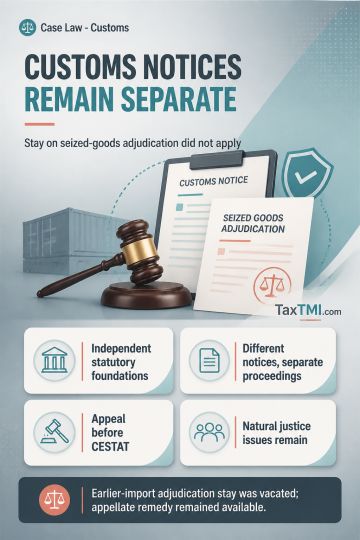
Independent show-cause notices remain separate proceedings, while customs adjudication challenges should ordinarily follow the statutory appellate rem...
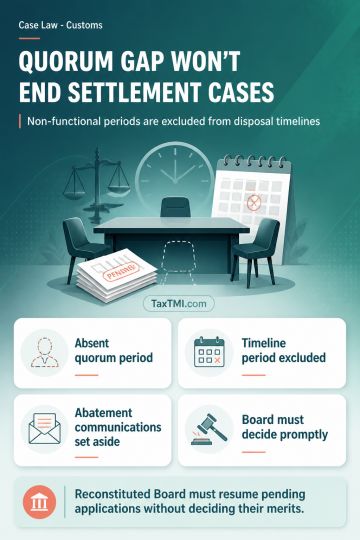
Institutional incapacity in customs settlement proceedings excludes non-functional quorum periods from statutory disposal timelines, preventing automa...
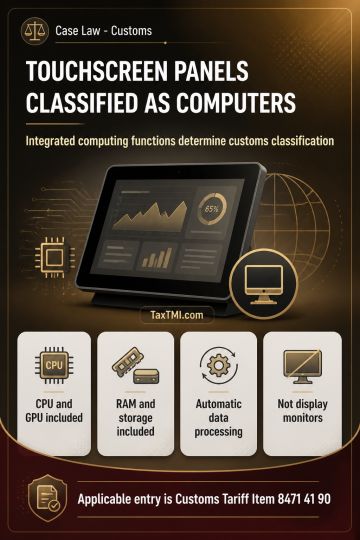
Interactive touchscreen panels with integrated computing functions fall under automatic data-processing machines rather than display monitors for cust...
Ex parte injunction service requirements were substantially met, while civil recovery and SFIO investigation into provident fund defalcation continued...
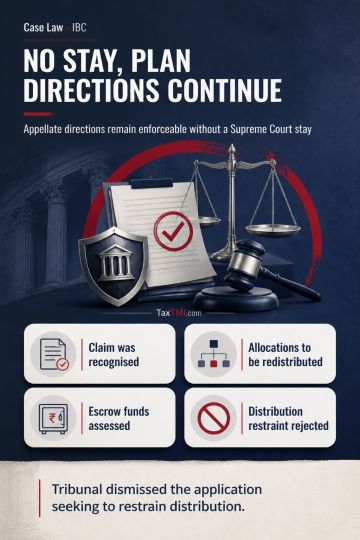
Enforcement of resolution-plan directions continues without a Supreme Court stay, preventing suspension of redistribution and escrowed-fund distributi...
Third-party ownership claims over attached property require Special Court adjudication where purchasers lack registered sale deeds and bona fides rema...
Pure-agent reimbursements in clearing and forwarding services are excluded from taxable value when qualifying third-party payments are properly record...
Page of 4813
Press 'Enter' after typing page number.
641 to 660 of 96257 Results
❮
❯
❯❯
0 / 200
Expand Note
Add to Folder
No Folders have been created
+
Are you sure you want to delete "My most important" ?
Adjudication under Sections 73 and 74 is dispute-based and is...
Composite GST notices, mandatory limitation, and same-subject bar: HC upheld valid notices but quashed overlapping proceedings and unauthorised withholding.
Contents
Summary
Note
Bookmark
Share
✓ Copied successfully !
Print
Print Options
For full text, please login
Login to TaxTMI
Verification Pending
The Email Id has not been verified. Click on the link we have sent on
Adjudication under Sections 73 and 74 is dispute-based and is not confined to a single financial year or tax period; a composite notice may validly cover multiple periods, and under Section 74 may include multiple noticees, subject to objections in individual proceedings. However, Section 6(2)(b) bars parallel proceedings on the same subject-matter once formal adjudication has begun, so overlapping proceedings were held unsustainable. The statutory timelines for issuing notice and passing the adjudication order were treated as mandatory, making notices issued without the prescribed lead time time-barred. One notice could not support separate orders by different authorities absent lawful transfer, and a direction to withhold payment was set aside for lack of statutory authority.
Adjudication under Sections 73 and 74 is dispute-based and is not confined to a single financial year or tax period; a composite notice may validly cover multiple periods, and under Section 74 may include multiple noticees, subject to objections in individual proceedings. However, Section 6(2)(b) bars parallel proceedings on the same subject-matter once formal adjudication has begun, so overlapping proceedings were held unsustainable. The statutory timelines for issuing notice and passing the adjudication order were treated as mandatory, making notices issued without the prescribed lead time time-barred. One notice could not support separate orders by different authorities absent lawful transfer, and a direction to withhold payment was set aside for lack of statutory authority.
Note: It is a system-generated summary and is for quick reference only.
 TaxTMI
  TaxTMI
 of 4813












 Join Channel