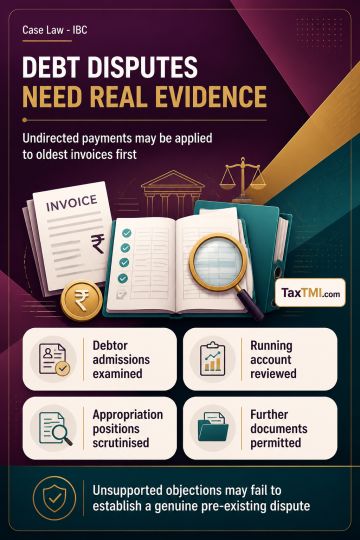
Pre-existing operational debt disputes require genuine evidence, while undirected running-account payments may be appropriated on a first-in-first-out...
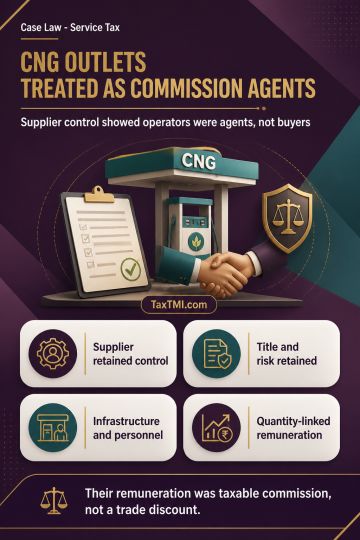
Agency in CNG distribution makes outlet operators commission agents, rendering taxable Business Auxiliary Service rather than purchasing goods for res...
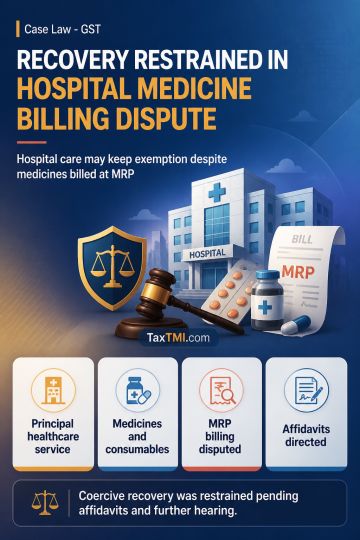
Composite inpatient healthcare supply may retain exemption despite MRP medicine billing, while separate taxable sale characterisation remains disputed...
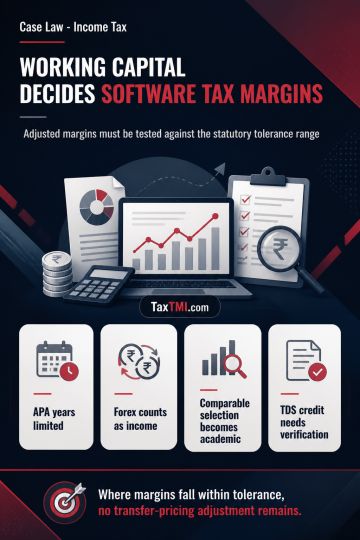
Working-capital adjustment determines whether software-services transfer-pricing margins fall within the statutory tolerance range, eliminating any ad...
Page of 4809
Press 'Enter' after typing page number.
1141 to 1160 of 96177 Results
❮
❯
❯❯
0 / 200
Expand Note
Add to Folder
No Folders have been created
+
Are you sure you want to delete "My most important" ?
An operative bankruptcy order triggered the statutory travel restriction under the Insolvency and Bankruptcy Code, so the bankrupt could not travel abroad without permission of the Adjudicating Authority. The Court distinguished this consequence from impounding under the Passports Act, holding that the Bankruptcy Trustee's communications merely conveyed the existing legal restriction and did not amount to unlawful passport seizure. It also held that the Trustee acted within statutory duties in securing compliance with the bankruptcy process, and that the petitioner had an efficacious remedy before the NCLT, including seeking permission to travel. The writ petition was dismissed as an attempt to bypass the statutory mechanism.
An operative bankruptcy order triggered the statutory travel restriction under the Insolvency and Bankruptcy Code, so the bankrupt could not travel abroad without permission of the Adjudicating Authority. The Court distinguished this consequence from impounding under the Passports Act, holding that the Bankruptcy Trustee's communications merely conveyed the existing legal restriction and did not amount to unlawful passport seizure. It also held that the Trustee acted within statutory duties in securing compliance with the bankruptcy process, and that the petitioner had an efficacious remedy before the NCLT, including seeking permission to travel. The writ petition was dismissed as an attempt to bypass the statutory mechanism.
Note: It is a system-generated summary and is for quick reference only.
 TaxTMI
  TaxTMI
 of 4809







 Join Channel