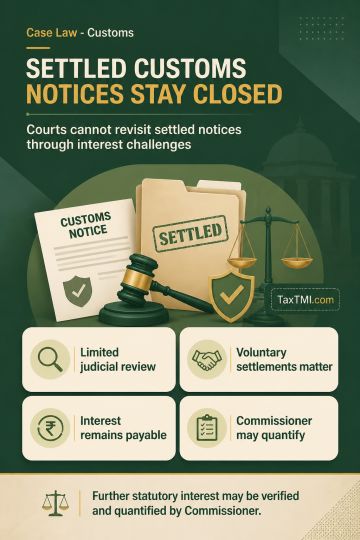
Judicial review of settlement orders cannot reopen settled customs notices, while statutory interest remains subject to verification and quantificatio...
Customs Broker licence lending for consideration justified revocation where exporter authorisation and client verification obligations were also breac...
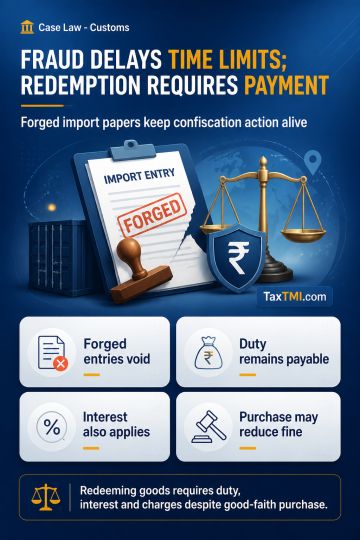
Fraudulent import documents suspend limitation protection, while redemption of confiscated goods requires duty and interest despite bona fide purchase...
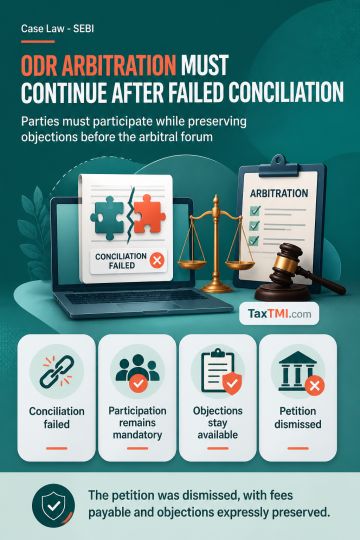
ODR arbitration participation remains mandatory after failed conciliation, while jurisdictional and maintainability objections stay available before t...
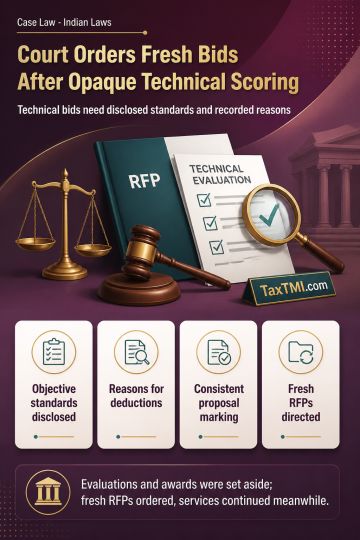
Transparency in technical bid evaluation requires disclosed standards and recorded reasons; opaque scoring invalidated tender awards and required fres...
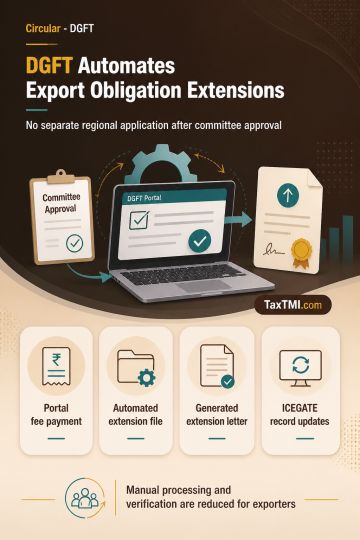
Automated export obligation extensions remove separate regional applications after committee approval for Advance Authorisation and EPCG authorisation...
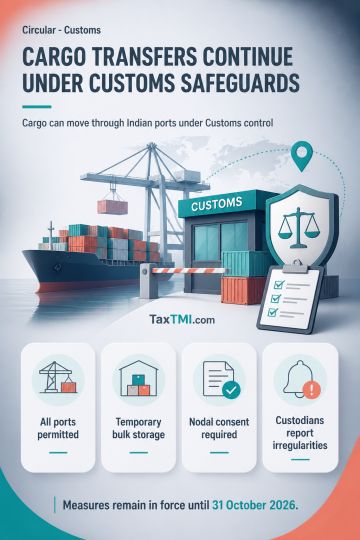
International cargo transhipment through Indian ports continues with Customs-controlled storage, re-export safeguards, and coordinated multi-station m...
An operative bankruptcy order triggered the statutory travel restriction under the Insolvency and Bankruptcy Code, so the bankrupt could not travel abroad without permission of the Adjudicating Authority. The Court distinguished this consequence from impounding under the Passports Act, holding that the Bankruptcy Trustee's communications merely conveyed the existing legal restriction and did not amount to unlawful passport seizure. It also held that the Trustee acted within statutory duties in securing compliance with the bankruptcy process, and that the petitioner had an efficacious remedy before the NCLT, including seeking permission to travel. The writ petition was dismissed as an attempt to bypass the statutory mechanism.
An operative bankruptcy order triggered the statutory travel restriction under the Insolvency and Bankruptcy Code, so the bankrupt could not travel abroad without permission of the Adjudicating Authority. The Court distinguished this consequence from impounding under the Passports Act, holding that the Bankruptcy Trustee's communications merely conveyed the existing legal restriction and did not amount to unlawful passport seizure. It also held that the Trustee acted within statutory duties in securing compliance with the bankruptcy process, and that the petitioner had an efficacious remedy before the NCLT, including seeking permission to travel. The writ petition was dismissed as an attempt to bypass the statutory mechanism.
Note: It is a system-generated summary and is for quick reference only.
 TaxTMI
  TaxTMI
 of 4817









 Join Channel