Commercial vehicle depreciation, scientifically determined warranty provisions and exempt-income disallowances were resolved in favour of the taxpayer...
Inherited property sale proceeds require capital-gains treatment where ownership is supported by evidence, not suspicion or unverified signature doubt...
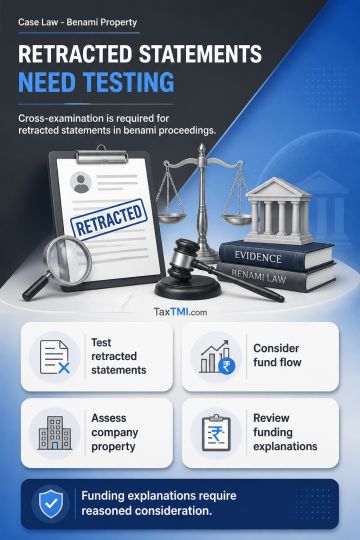
Cross-examination of retracted statements is essential where foundational evidence supports a benami allegation and documented funding explanations re...
Capital-goods exemption covers plant-modernisation accessories, while the import restriction applies only to earlier capital-goods components and spar...
Sections 118 and 139 of the Negotiable Instruments Act created a statutory presumption in favour of the complainant where the accused's cheques were signed, dishonoured for insufficiency of funds, and the notice referred to an acknowledged liability. The accused failed to rebut that presumption by proving that Yahoo Limited had taken over the entire liability or that the complainant had accepted performance from that third party; the cheque-on-security plea also did not defeat liability once the debt matured. Pendency of civil proceedings did not bar prosecution, and the High Court declined to disturb concurrent factual findings in revision absent perversity. Conviction under Section 138 was therefore sustained, but the appellate court could not suo motu enhance the default sentence in the accused's appeal, so that enhancement was set aside and the trial sentence restored.
Sections 118 and 139 of the Negotiable Instruments Act created a statutory presumption in favour of the complainant where the accused's cheques were signed, dishonoured for insufficiency of funds, and the notice referred to an acknowledged liability. The accused failed to rebut that presumption by proving that Yahoo Limited had taken over the entire liability or that the complainant had accepted performance from that third party; the cheque-on-security plea also did not defeat liability once the debt matured. Pendency of civil proceedings did not bar prosecution, and the High Court declined to disturb concurrent factual findings in revision absent perversity. Conviction under Section 138 was therefore sustained, but the appellate court could not suo motu enhance the default sentence in the accused's appeal, so that enhancement was set aside and the trial sentence restored.
Note: It is a system-generated summary and is for quick reference only.
 TaxTMI
  TaxTMI
 of 4814




















 Join Channel