Food supplement classification requires common parlance and authoritative tests, preventing treatment as proprietary Ayurvedic medicines without suppo...
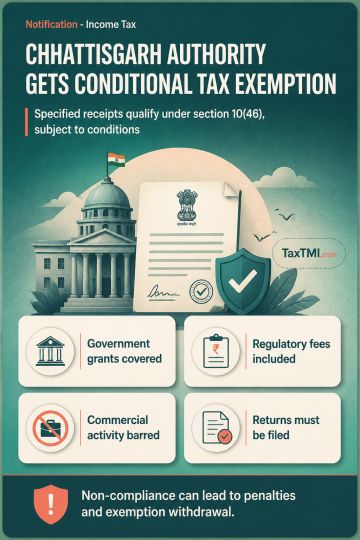
Specified regulatory authority income receives conditional tax exemption, subject to non-commercial activity, unchanged income character, and return f...
Tax exemption for regulatory authority income applies retrospectively, subject to non-commercial activity, unchanged income sources, and return-filing...
Input tax credit conditions remain constitutionally valid, with eligible recipient claims considered under GST circulars and retrospective filing dead...
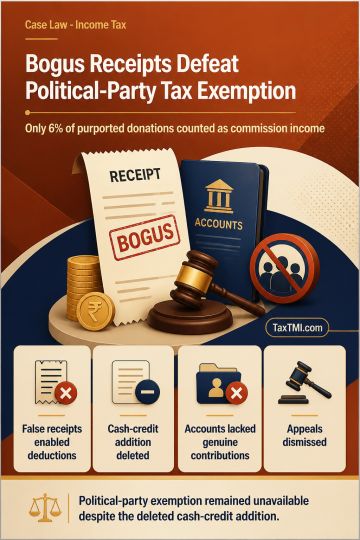
Bogus donation receipts justified commission income assessment and defeated political-party tax exemption for inaccurate accounts and reporting failur...
Page of 4811
Press 'Enter' after typing page number.
901 to 920 of 96208 Results
❮
❯
❯❯
0 / 200
Expand Note
Add to Folder
No Folders have been created
+
Are you sure you want to delete "My most important" ?
The statutory bar on parallel proceedings under the GST law applies when the later action concerns the same subject matter, meaning the same distinct infraction, tax liability or obligation, not the year or return in general. Applying this principle, the High Court found that the assessment and rectification orders were unsustainable because the authority did not clearly determine whether the transactions covered by the earlier Central proceedings were being omitted from the State action or whether the State case involved separate infractions. The orders were quashed and the matter remanded for fresh consideration with a transaction-wise examination of overlap and exclusion of matters already covered by the Central authorities.
The statutory bar on parallel proceedings under the GST law applies when the later action concerns the same subject matter, meaning the same distinct infraction, tax liability or obligation, not the year or return in general. Applying this principle, the High Court found that the assessment and rectification orders were unsustainable because the authority did not clearly determine whether the transactions covered by the earlier Central proceedings were being omitted from the State action or whether the State case involved separate infractions. The orders were quashed and the matter remanded for fresh consideration with a transaction-wise examination of overlap and exclusion of matters already covered by the Central authorities.
Note: It is a system-generated summary and is for quick reference only.
 TaxTMI
  TaxTMI
 of 4811











 Join Channel