Cross-examination rights and corroborated evidence limit customs penalties for misdeclaration in genuine import transactions involving documented clea...
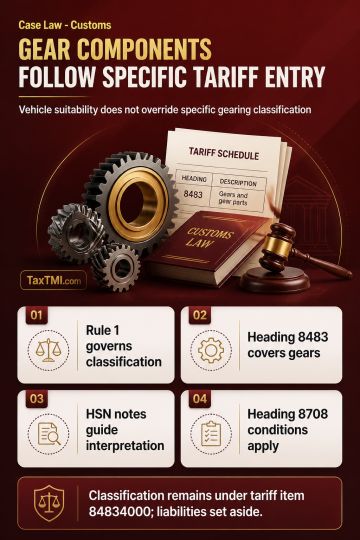
Tariff classification of vehicle gear components follows the specific gearing entry, displacing motor-vehicle parts classification and related liabili...
Necessary-party requirements limit impleadment of independent entities, while deferred consideration does not create an appealable adverse determinati...
Food supplement classification requires common parlance and authoritative tests, preventing treatment as proprietary Ayurvedic medicines without suppo...
Specified regulatory authority income receives conditional tax exemption, subject to non-commercial activity, unchanged income character, and return f...
Tax exemption for regulatory authority income applies retrospectively, subject to non-commercial activity, unchanged income sources, and return-filing...
Revision under Section 263 was sustained because the appellate merger doctrine applied only to matters actually considered by the CIT(A), and the separate issue of apportioning common Head Office expenses for the Section 80-IA deduction had not been examined. The Court held that transfer pricing proceedings under Section 92CA addressed arm's length price, not the full computation of eligible profits, so the Assessing Officer retained a duty to verify overhead allocation. It also held that a plausible view requires actual inquiry, and the absence of inquiry made the assessment erroneous and prejudicial. For the abated search year, the absence of seized material did not bar scrutiny, and the appeals were dismissed.
Revision under Section 263 was sustained because the appellate merger doctrine applied only to matters actually considered by the CIT(A), and the separate issue of apportioning common Head Office expenses for the Section 80-IA deduction had not been examined. The Court held that transfer pricing proceedings under Section 92CA addressed arm's length price, not the full computation of eligible profits, so the Assessing Officer retained a duty to verify overhead allocation. It also held that a plausible view requires actual inquiry, and the absence of inquiry made the assessment erroneous and prejudicial. For the abated search year, the absence of seized material did not bar scrutiny, and the appeals were dismissed.
Note: It is a system-generated summary and is for quick reference only.
 TaxTMI
  TaxTMI
 of 4809



















 Join Channel




