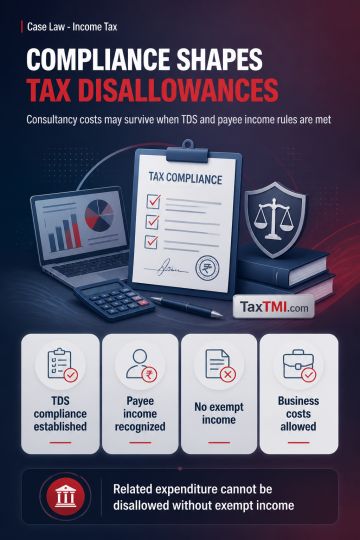
Tax deduction compliance and payee income recognition govern consultancy disallowance, while no exempt income prevents related expenditure disallowanc...
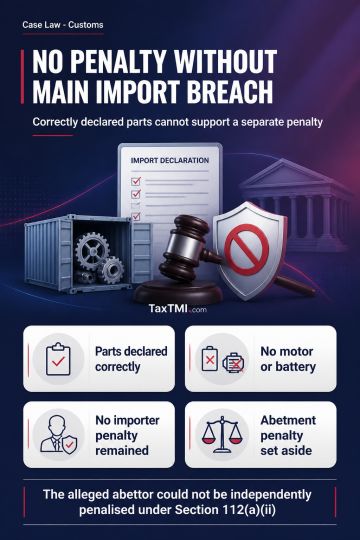
Derivative abetment liability fails when correctly declared imported components establish no underlying improper importation by the principal importer...
Tax exemption for regulatory authority income applies retrospectively, subject to non-commercial activity, unchanged income sources, and return filing...
Where customs duty was demanded for breach of notification conditions and penalty was imposed under Section 112(ii) of the Customs Act, the Tribunal held that the reduced-penalty option under Section 114A could not be applied, because that concession is tied to cases where duty is determined under Section 28 and penalty follows that provision. As Section 112(ii), during the relevant period, prescribed only the penalty range and no 25% payment option, the penalty could not be sustained on that reduced basis. The matter was remanded for fresh determination of customs penalty strictly under Section 112(ii). The respondent's cross objections were treated as an appeal and also remanded for reconsideration of the penalty challenge.
Where customs duty was demanded for breach of notification conditions and penalty was imposed under Section 112(ii) of the Customs Act, the Tribunal held that the reduced-penalty option under Section 114A could not be applied, because that concession is tied to cases where duty is determined under Section 28 and penalty follows that provision. As Section 112(ii), during the relevant period, prescribed only the penalty range and no 25% payment option, the penalty could not be sustained on that reduced basis. The matter was remanded for fresh determination of customs penalty strictly under Section 112(ii). The respondent's cross objections were treated as an appeal and also remanded for reconsideration of the penalty challenge.
Note: It is a system-generated summary and is for quick reference only.
 TaxTMI
  TaxTMI
 of 4811










 Join Channel


