Specified regulatory authority income receives conditional tax exemption, subject to non-commercial activity, unchanged income character, and return f...
Tax exemption for regulatory authority income applies retrospectively, subject to non-commercial activity, unchanged income sources, and return-filing...
Input tax credit conditions remain constitutionally valid, with eligible recipient claims considered under GST circulars and retrospective filing dead...
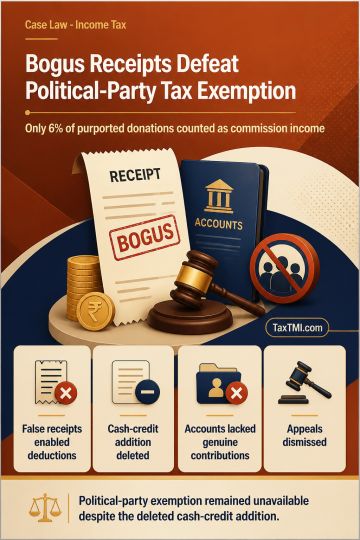
Bogus donation receipts justified commission income assessment and defeated political-party tax exemption for inaccurate accounts and reporting failur...
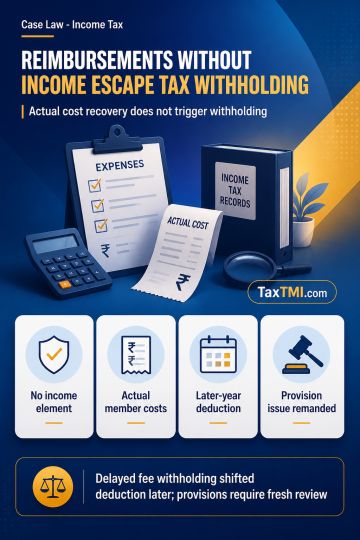
Pure reimbursement without income element escapes tax withholding, while delayed withholding and unsupported provisions face deferred or renewed scrut...
Public benefit requirement defeats charitable registration where residents' association services are reciprocal, member-only facilities governed by mu...
A borrower account fraud classification was quashed where the bank relied on a transaction audit report already found insufficient to support undervaluation, preferential or fraudulent transactions, and also on undisclosed Joint Lenders Meeting material. Because those materials were not supplied in the show cause notice or otherwise disclosed, the petitioners had no effective opportunity to respond, and the bank could not cure the defect by later referring to an FIR that had not formed part of the original decision-making record. The Court held that the process violated audi alteram partem and that the impugned order was non-speaking, while reserving liberty to proceed afresh in accordance with law and RBI directions.
A borrower account fraud classification was quashed where the bank relied on a transaction audit report already found insufficient to support undervaluation, preferential or fraudulent transactions, and also on undisclosed Joint Lenders Meeting material. Because those materials were not supplied in the show cause notice or otherwise disclosed, the petitioners had no effective opportunity to respond, and the bank could not cure the defect by later referring to an FIR that had not formed part of the original decision-making record. The Court held that the process violated audi alteram partem and that the impugned order was non-speaking, while reserving liberty to proceed afresh in accordance with law and RBI directions.
Note: It is a system-generated summary and is for quick reference only.
 TaxTMI
  TaxTMI
 of 4814
















 Join Channel


