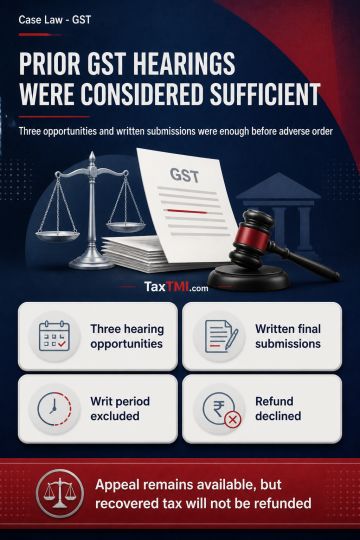
Personal hearing requirements in GST adjudication were satisfied by prior opportunities and written submissions; appellate limitation received writ-pe...
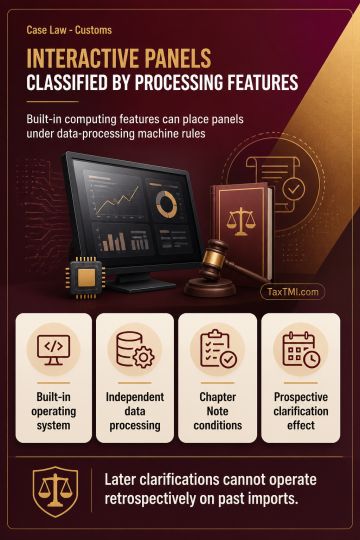
Interactive flat panels meeting automatic data processing conditions are distinguished from monitors, while later classification clarifications apply ...
Page of 4813
Press 'Enter' after typing page number.
1061 to 1080 of 96257 Results
❮
❯
❯❯
0 / 200
Expand Note
Add to Folder
No Folders have been created
+
Are you sure you want to delete "My most important" ?
Section 536(2) was construed as making post-petition dispositions voidable rather than automatically void, so the court could validate a bona fide transaction if it benefited the company or creditors. The first transaction was validated because the applicant showed no knowledge of the winding-up petition despite due diligence, paid above market value, used the proceeds to discharge creditors, and no fraud, taint, or undervaluation was proved. Alleged statutory dues did not defeat validation on the material before the court. The second transaction, being a private inter se transfer, was held outside the scope of the application and was not adjudicated.
Section 536(2) was construed as making post-petition dispositions voidable rather than automatically void, so the court could validate a bona fide transaction if it benefited the company or creditors. The first transaction was validated because the applicant showed no knowledge of the winding-up petition despite due diligence, paid above market value, used the proceeds to discharge creditors, and no fraud, taint, or undervaluation was proved. Alleged statutory dues did not defeat validation on the material before the court. The second transaction, being a private inter se transfer, was held outside the scope of the application and was not adjudicated.
Note: It is a system-generated summary and is for quick reference only.
 TaxTMI
  TaxTMI
 of 4813






 Join Channel