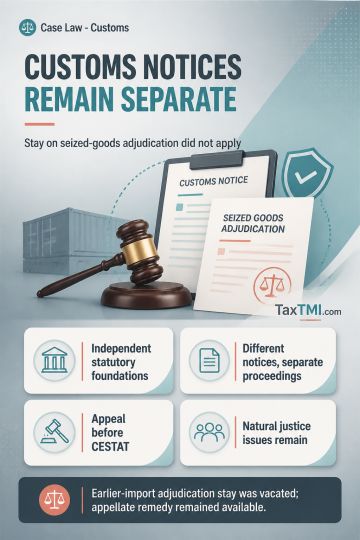
Independent show-cause notices remain separate proceedings, while customs adjudication challenges should ordinarily follow the statutory appellate rem...
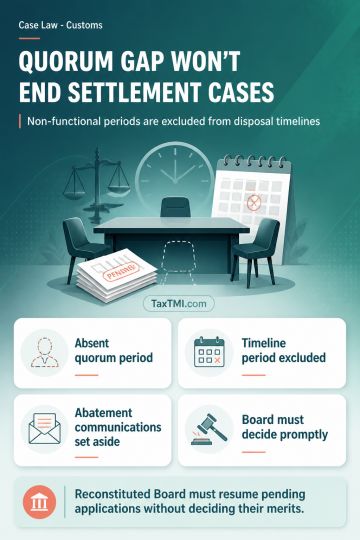
Institutional incapacity in customs settlement proceedings excludes non-functional quorum periods from statutory disposal timelines, preventing automa...
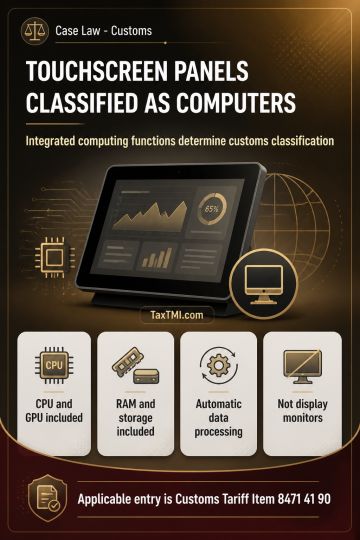
Interactive touchscreen panels with integrated computing functions fall under automatic data-processing machines rather than display monitors for cust...
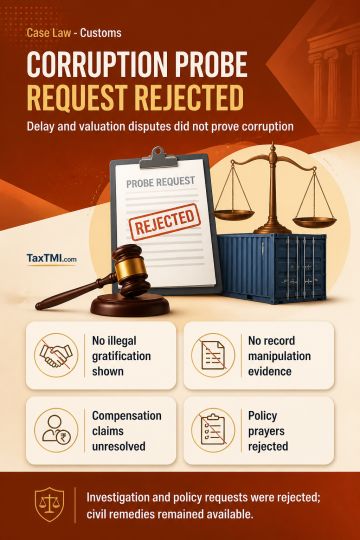
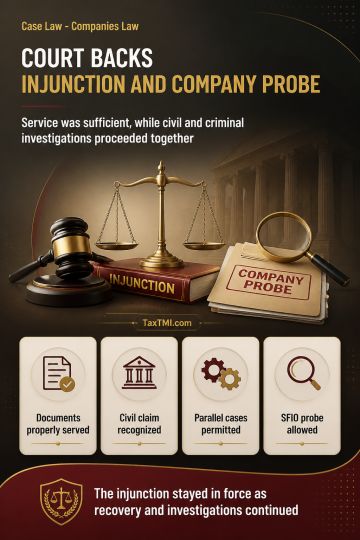
Ex parte injunction service requirements were substantially met, while civil recovery and SFIO investigation into provident fund defalcation continued...
Section 536(2) was construed as making post-petition dispositions voidable rather than automatically void, so the court could validate a bona fide transaction if it benefited the company or creditors. The first transaction was validated because the applicant showed no knowledge of the winding-up petition despite due diligence, paid above market value, used the proceeds to discharge creditors, and no fraud, taint, or undervaluation was proved. Alleged statutory dues did not defeat validation on the material before the court. The second transaction, being a private inter se transfer, was held outside the scope of the application and was not adjudicated.
Section 536(2) was construed as making post-petition dispositions voidable rather than automatically void, so the court could validate a bona fide transaction if it benefited the company or creditors. The first transaction was validated because the applicant showed no knowledge of the winding-up petition despite due diligence, paid above market value, used the proceeds to discharge creditors, and no fraud, taint, or undervaluation was proved. Alleged statutory dues did not defeat validation on the material before the court. The second transaction, being a private inter se transfer, was held outside the scope of the application and was not adjudicated.
Note: It is a system-generated summary and is for quick reference only.
 TaxTMI
  TaxTMI
 of 4816








 Join Channel