Just a moment...

Top
Help
×

By creating an account you can:

Logo TaxTMI
Call Us / Help / Feedback

Contact Us At :

E-mail: [email protected]

Call / WhatsApp at: +91 99117 96707

For more information, Check Contact Us

FAQs :

To know Frequently Asked Questions, Check FAQs

Most Asked Video Tutorials :

For more tutorials, Check Video Tutorials

Submit Feedback/Suggestion :

Email :
Please provide your email address so we can follow up on your feedback.
Category :
Description :
Min 15 characters 0/2000
Make Most of Text Search
  1. Checkout this video tutorial: How to search effectively on TaxTMI.
  2. Put words in double quotes for exact word search, eg: "income tax"
  3. Avoid noise words such as : 'and, of, the, a'
  4. Sort by Relevance to get the most relevant document.
  5. Press Enter to add multiple terms/multiple phrases, and then click on Search to Search.
  6. Text Search
  7. The system will try to fetch results that contains ALL your words.
  8. Once you add keywords, you'll see a new 'Search In' filter that makes your results even more precise.
  9. Text Search
Add to...
You have not created any category. Kindly create one to bookmark this item!
Create New Category
Hide
Title :
Description :
❮❮ Hide
Default View
Expand ❯❯
Close ✕
🔎 Highlights - Adv. Search
TEXT SEARCH:

Press 'Enter' to add multiple search terms. Rules for Better Search

Search In:
Main Text + AI Text
  • Main Text
  • Main Text + AI Text
  • AI Text
Law:
---- All Laws----
  • ---- All Laws----
  • Income Tax
  • Direct Taxes
  • Benami Property
  • Central GST Laws
  • SGST - State GST Laws
  • Customs
  • FTP - Foreign Trade Policy
  • SEZ - Special Economic Zone
  • FEMA - Foreign Exchange Management
  • Companies Law
  • SEBI - Securities & Exchange Board of India
  • IBC - Insolvency and Bankruptcy
  • Law of Competition
  • PMLA - Money-Laundering
  • Indian Laws
  • Bill / Finance Bills
  • Wealth Tax
  • Service Tax
  • Central Excise
  • VAT / Sales Tax
Month:
---- All Months ----
  • ---- All Months ----
  • January
  • February
  • March
  • April
  • May
  • June
  • July
  • August
  • September
  • October
  • November
  • December
Year:
---- All Years ----
  • ---- All Years ----
  • 2026
  • 2025
  • 2024
  • 2023
  • 2022
  • 2021
  • 2020
  • 2019
  • 2018
  • 2017
  • 2016
  • 2015
  • 2014
  • 2013
  • 2012
  • 2011
Sort By: ?
In Sort By 'Default', exact matches for text search are shown at the top, followed by the remaining results in their regular order.
Relevance Default Date
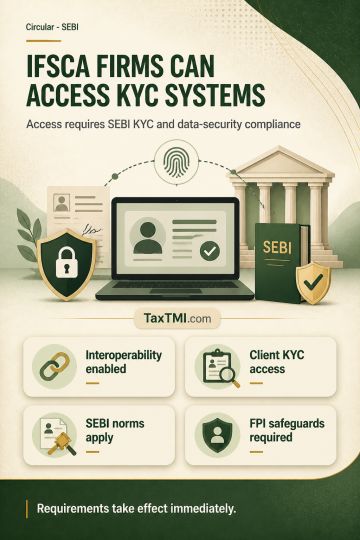
    KRA interoperability permits IFSCA-regulated entities to access KYC systems subject to securities-market KYC and FPI data-security requirements.
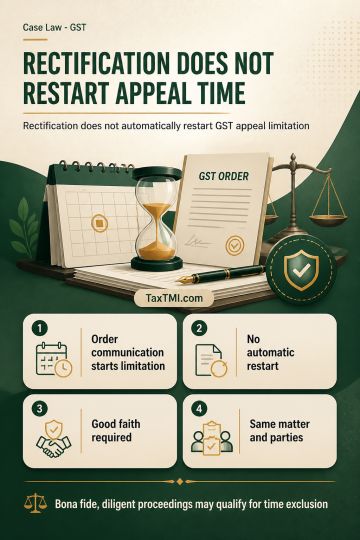
    GST appeal limitation permits exclusion for bona fide rectification proceedings, but rectification does not automatically restart the appeal period.
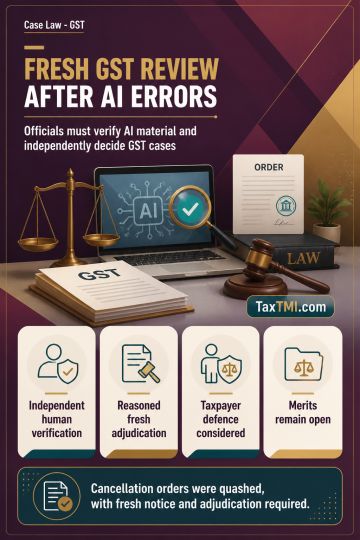
    AI-generated legal material requires independent verification and human oversight; GST cancellation proceedings require fresh reasoned adjudication.
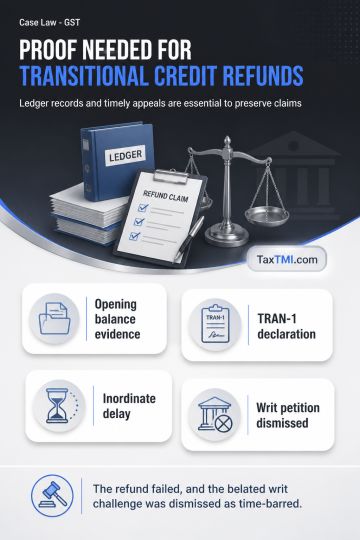
    Transitional credit refunds require Electronic Credit Ledger proof, while belated writs cannot bypass expired statutory appeal limitation.
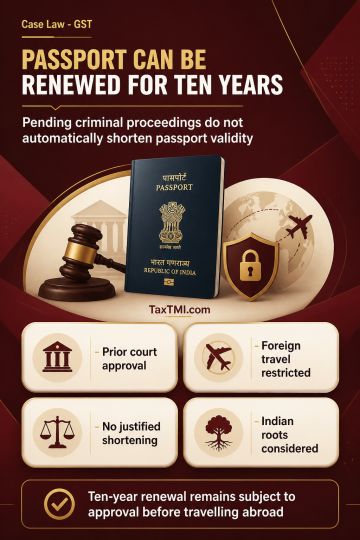
    Passport renewal during criminal proceedings can run full term where prior court approval effectively safeguards foreign travel.
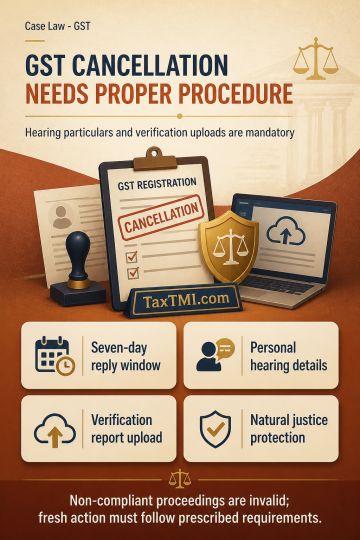
    GST registration cancellation requires a specified personal hearing and uploaded verification records; non-compliance invalidates the proceedings.
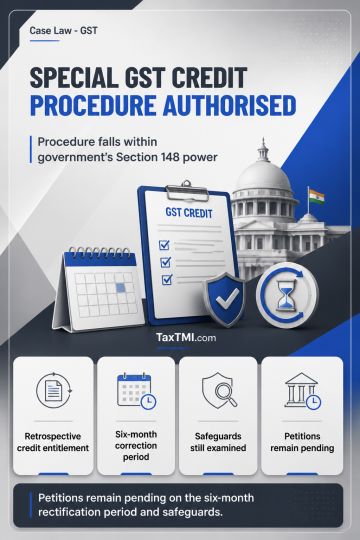
    Special input tax credit procedure is authorised, while safeguards for the six-month rectification period remain under consideration.
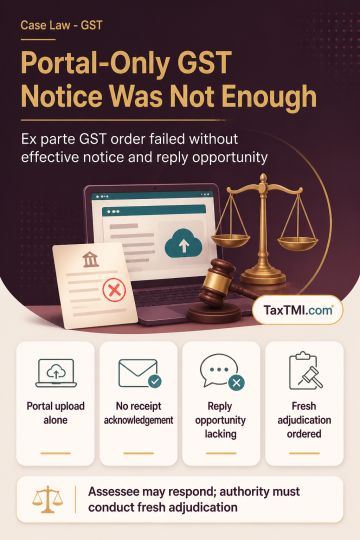
    Effective service of GST show cause notices requires more than portal upload before ex parte adjudication can stand.
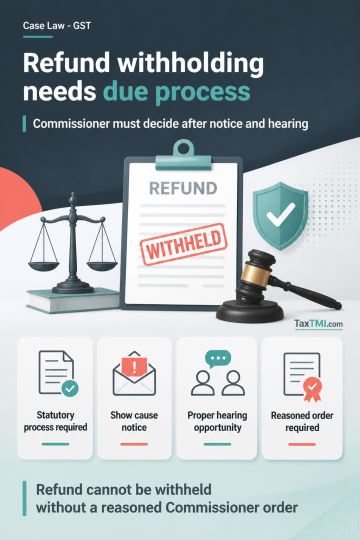
    Electronic cash ledger refunds require notice, hearing and a reasoned Commissioner determination before withholding during a pending revenue appeal.
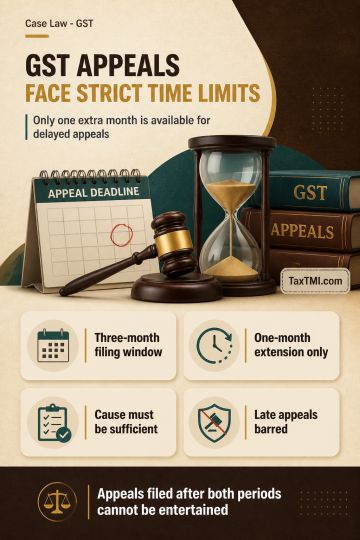
    GST appeal limitation restricts delay condonation to the statutory extension, barring appeals filed after both prescribed periods.
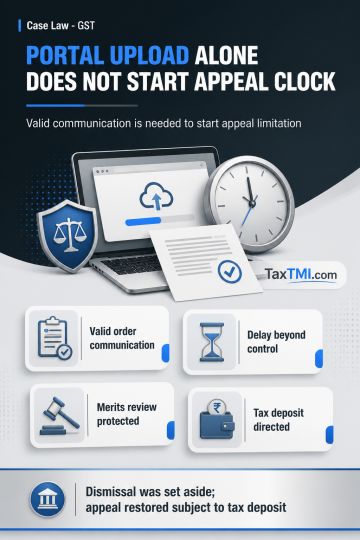
    GST portal upload without valid communication does not trigger appeal limitation; delayed statutory appeal restored for merits review.
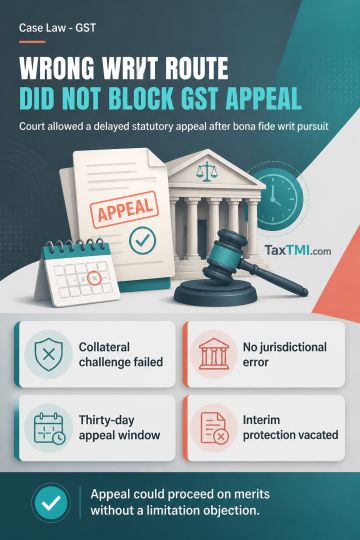
    Collateral challenge to GST adjudication order failed, but bona fide pursuit of writ remedy preserved statutory appellate recourse.
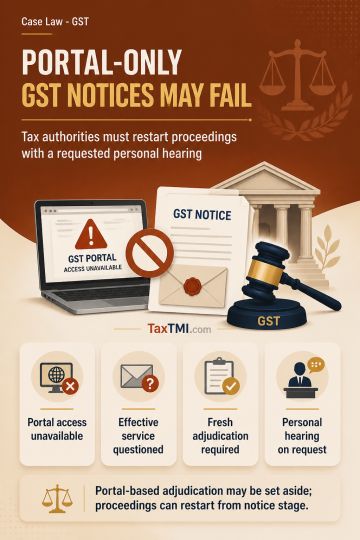
    Portal-only GST notice after registration cancellation is ineffective, requiring fresh adjudication and personal hearing when requested.
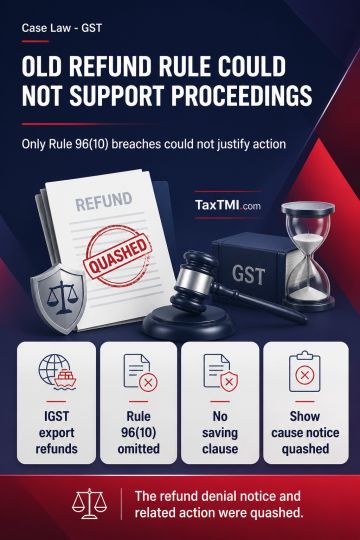
    IGST export refund restrictions under omitted Rule 96(10) cannot sustain proceedings without a saving clause.
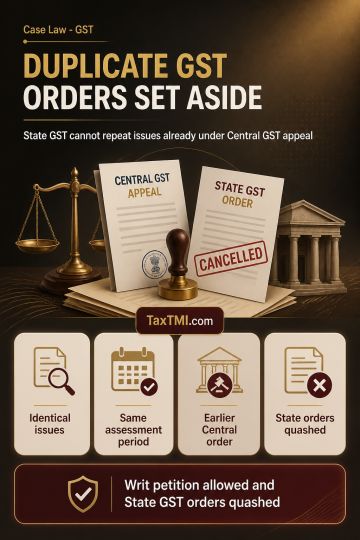
    Duplicate GST adjudication for identical issues and periods is unsustainable when earlier Central GST proceedings remain under appeal
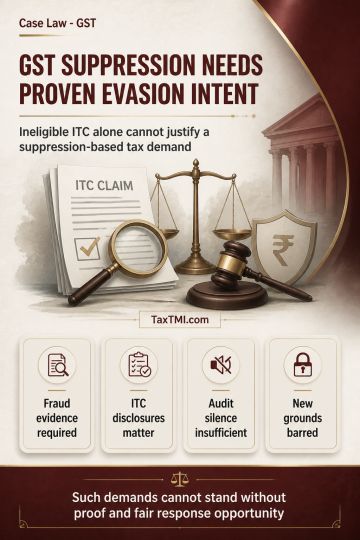
    Suppression under GST requires proven intent to evade; ineligible ITC or audit non-response alone cannot sustain demand.
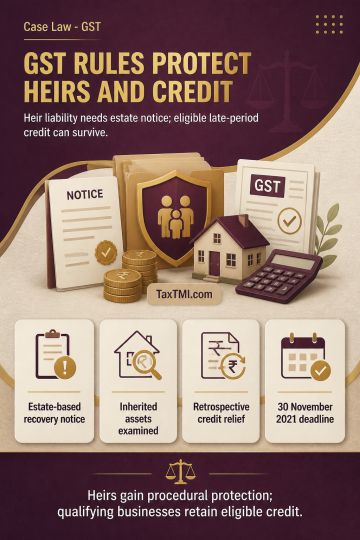
    Legal-heir GST liability requires estate-based notice, while retrospective input tax credit relief overrides belated-return disallowance.
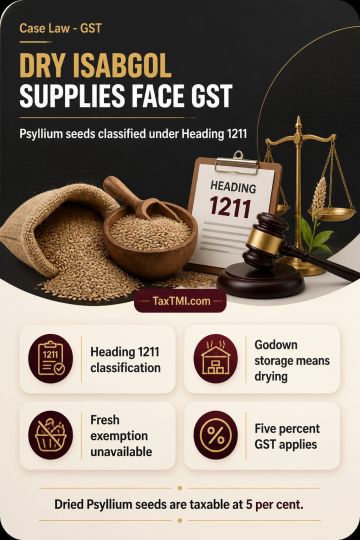
    Psyllium seed classification under Heading 1211 makes dried, godown-stored supplies taxable and excludes fresh-seed GST exemption.
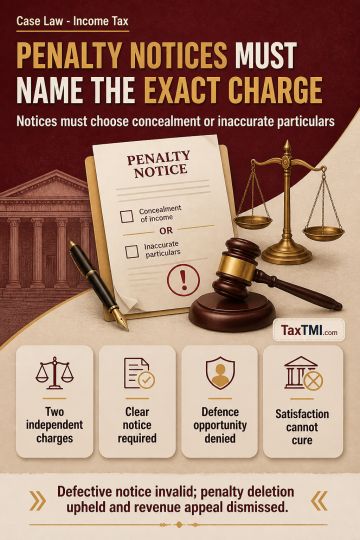
    Specificity of penalty charge is mandatory: notices retaining both section 271(1)(c) limbs cannot sustain penalty proceedings.
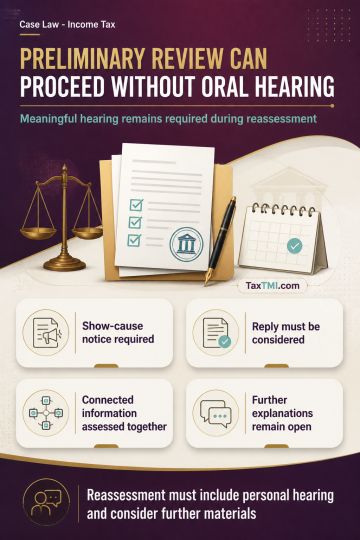
    Pre-reassessment procedural safeguards permit prima facie review without oral hearing, but require meaningful hearing during reassessment proceedings.
❯❯
Maximize Maximize Maximize
0 / 200
Expand Note
Add to Folder

No Folders have been created

+

Are you sure you want to delete "My most important" ?

NOTE:

Highlights
Showing Results for :
Reset Filters
Results Found:
Show All Summaries Hide All Summaries

Highlights

Back

All Highlights

Showing Results for :
Reset Filters
No Records Found

Highlights

Back

All Highlights

whatsapp Join Channel
Showing Results for : Reset Filters

Section 536(2) was construed as making post-petition...

Post-petition transfer validation under winding-up law upheld for a bona fide transaction benefiting creditors and lacking fraud.

Contents
Summary
Note

Note

-

Bookmark

Print

Print

Companies Law May 9, 2026 Case Laws HC
Section 536(2) was construed as making post-petition dispositions voidable rather than automatically void, so the court could validate a bona fide transaction if it benefited the company or creditors. The first transaction was validated because the applicant showed no knowledge of the winding-up petition despite due diligence, paid above market value, used the proceeds to discharge creditors, and no fraud, taint, or undervaluation was proved. Alleged statutory dues did not defeat validation on the material before the court. The second transaction, being a private inter se transfer, was held outside the scope of the application and was not adjudicated.

Topics

Acts Income Tax