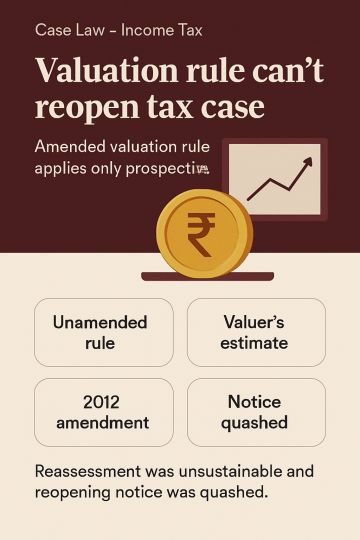
Prospective valuation amendment limits reassessment: unamended fair market value reference could not justify reopening based on a registered valuer's ...
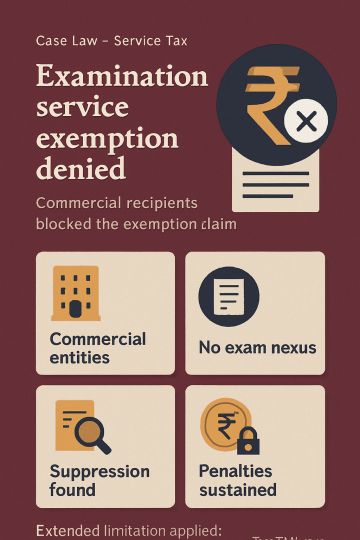
Exemption for examination-related services rejected where recipients were commercial entities; suppression sustained extended limitation and penalties...
Page of 4809
Press 'Enter' after typing page number.
1501 to 1520 of 96177 Results
❮
❯
❯❯
0 / 200
Expand Note
Add to Folder
No Folders have been created
+
Are you sure you want to delete "My most important" ?
Section 7 of the Insolvency and Bankruptcy Code requires the existence of a financial debt and default, but the Supreme Court held that insolvency cannot be used as a coercive recovery tool. Reading the quadripartite agreement, the Court found that the disbursement was made to the builder and was tied to construction, transfer, refund contingencies, non-transfer without consent, and security creation, making the dispute predominantly contractual rather than a simple lending default. As recovery proceedings were already pending before the DRT, initiation of CIRP was unwarranted and the refusal to admit the Section 7 application was upheld.
Section 7 of the Insolvency and Bankruptcy Code requires the existence of a financial debt and default, but the Supreme Court held that insolvency cannot be used as a coercive recovery tool. Reading the quadripartite agreement, the Court found that the disbursement was made to the builder and was tied to construction, transfer, refund contingencies, non-transfer without consent, and security creation, making the dispute predominantly contractual rather than a simple lending default. As recovery proceedings were already pending before the DRT, initiation of CIRP was unwarranted and the refusal to admit the Section 7 application was upheld.
Note: It is a system-generated summary and is for quick reference only.
 TaxTMI
  TaxTMI
 of 4809




 Join Channel