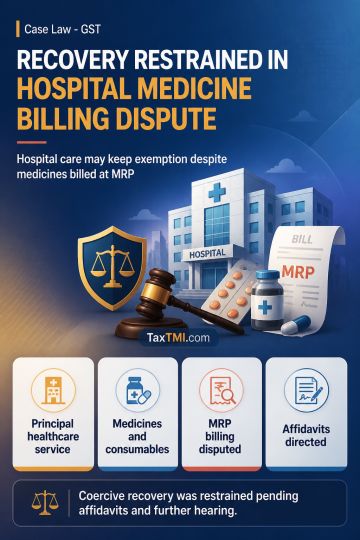
Composite inpatient healthcare supply may retain exemption despite MRP medicine billing, while separate taxable sale characterisation remains disputed...
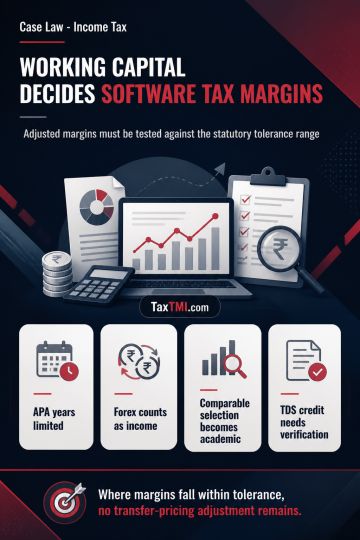
Working-capital adjustment determines whether software-services transfer-pricing margins fall within the statutory tolerance range, eliminating any ad...
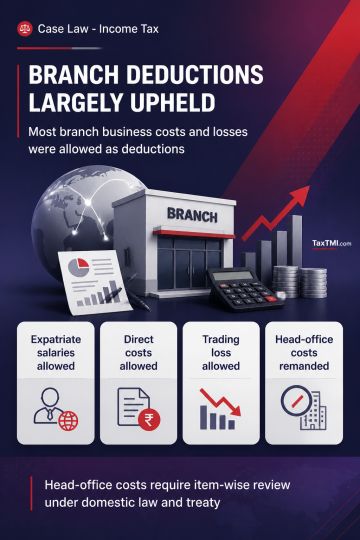
Permanent establishment deductions upheld for expatriate salaries, direct costs and trading losses, while head-office costs require fresh classificati...
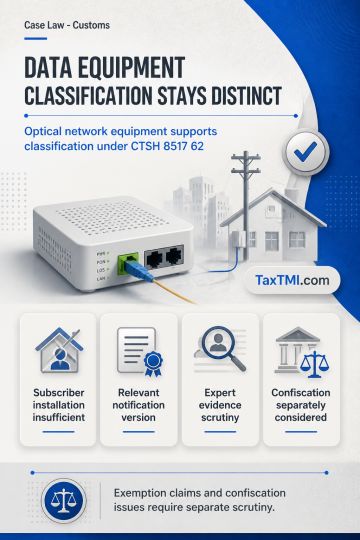
Data transmission equipment classification under CTSH 8517 62 remains distinct from residual classification, with exemption evidence requiring scrutin...
Section 7 of the Insolvency and Bankruptcy Code requires the existence of a financial debt and default, but the Supreme Court held that insolvency cannot be used as a coercive recovery tool. Reading the quadripartite agreement, the Court found that the disbursement was made to the builder and was tied to construction, transfer, refund contingencies, non-transfer without consent, and security creation, making the dispute predominantly contractual rather than a simple lending default. As recovery proceedings were already pending before the DRT, initiation of CIRP was unwarranted and the refusal to admit the Section 7 application was upheld.
Section 7 of the Insolvency and Bankruptcy Code requires the existence of a financial debt and default, but the Supreme Court held that insolvency cannot be used as a coercive recovery tool. Reading the quadripartite agreement, the Court found that the disbursement was made to the builder and was tied to construction, transfer, refund contingencies, non-transfer without consent, and security creation, making the dispute predominantly contractual rather than a simple lending default. As recovery proceedings were already pending before the DRT, initiation of CIRP was unwarranted and the refusal to admit the Section 7 application was upheld.
Note: It is a system-generated summary and is for quick reference only.
 TaxTMI
  TaxTMI
 of 4811




 Join Channel