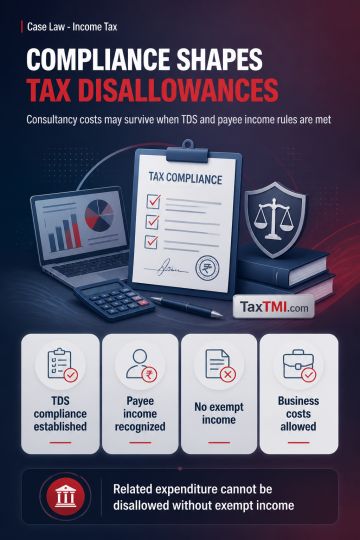
Tax deduction compliance and payee income recognition govern consultancy disallowance, while no exempt income prevents related expenditure disallowanc...
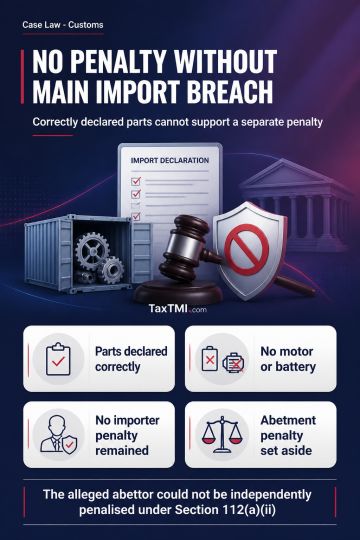
Derivative abetment liability fails when correctly declared imported components establish no underlying improper importation by the principal importer...
Section 7 of the Insolvency and Bankruptcy Code requires the existence of a financial debt and default, but the Supreme Court held that insolvency cannot be used as a coercive recovery tool. Reading the quadripartite agreement, the Court found that the disbursement was made to the builder and was tied to construction, transfer, refund contingencies, non-transfer without consent, and security creation, making the dispute predominantly contractual rather than a simple lending default. As recovery proceedings were already pending before the DRT, initiation of CIRP was unwarranted and the refusal to admit the Section 7 application was upheld.
Section 7 of the Insolvency and Bankruptcy Code requires the existence of a financial debt and default, but the Supreme Court held that insolvency cannot be used as a coercive recovery tool. Reading the quadripartite agreement, the Court found that the disbursement was made to the builder and was tied to construction, transfer, refund contingencies, non-transfer without consent, and security creation, making the dispute predominantly contractual rather than a simple lending default. As recovery proceedings were already pending before the DRT, initiation of CIRP was unwarranted and the refusal to admit the Section 7 application was upheld.
Note: It is a system-generated summary and is for quick reference only.
 TaxTMI
  TaxTMI
 of 4813








 Join Channel


