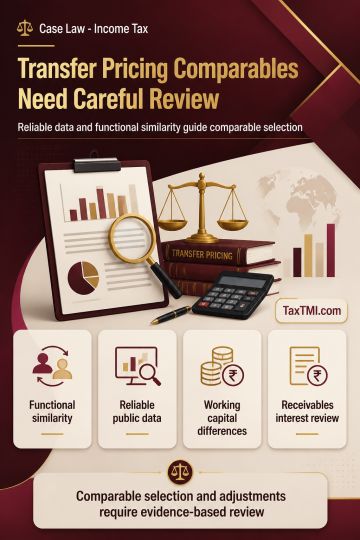
Transfer pricing comparability requires functional alignment, reliable financial data, and careful review of working capital and receivables adjustmen...
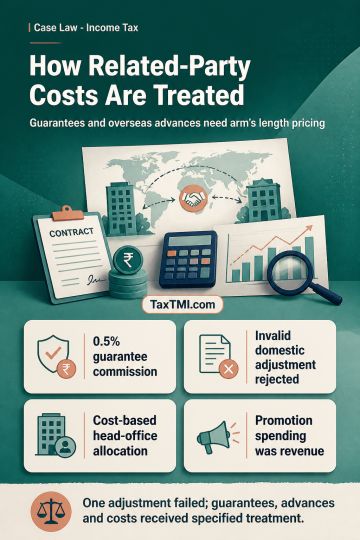
Transfer pricing rules require benchmarking corporate guarantees and associated-enterprise advances, while invalid domestic-transaction adjustments ca...
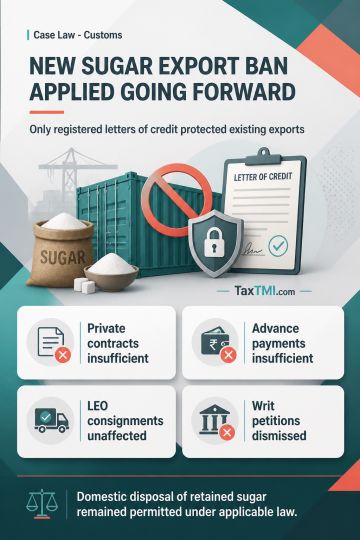
Prospective sugar export prohibition required registered letters of credit; private contracts and export quotas created no enforceable continuation ri...
Section 7 of the Insolvency and Bankruptcy Code requires the existence of a financial debt and default, but the Supreme Court held that insolvency cannot be used as a coercive recovery tool. Reading the quadripartite agreement, the Court found that the disbursement was made to the builder and was tied to construction, transfer, refund contingencies, non-transfer without consent, and security creation, making the dispute predominantly contractual rather than a simple lending default. As recovery proceedings were already pending before the DRT, initiation of CIRP was unwarranted and the refusal to admit the Section 7 application was upheld.
Section 7 of the Insolvency and Bankruptcy Code requires the existence of a financial debt and default, but the Supreme Court held that insolvency cannot be used as a coercive recovery tool. Reading the quadripartite agreement, the Court found that the disbursement was made to the builder and was tied to construction, transfer, refund contingencies, non-transfer without consent, and security creation, making the dispute predominantly contractual rather than a simple lending default. As recovery proceedings were already pending before the DRT, initiation of CIRP was unwarranted and the refusal to admit the Section 7 application was upheld.
Note: It is a system-generated summary and is for quick reference only.
 TaxTMI
  TaxTMI
 of 4814








 Join Channel