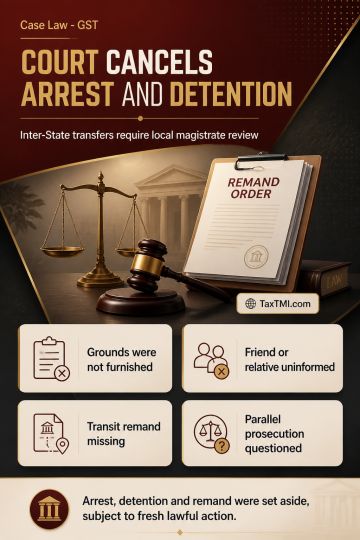
Arrest safeguards and transit remand requirements invalidated detention following inter-State transfer without communicated grounds or magistrate auth...
Arrest safeguards require disclosed grounds, relative intimation and transit remand, while duplicate prosecution under the CGST framework is unsustain...
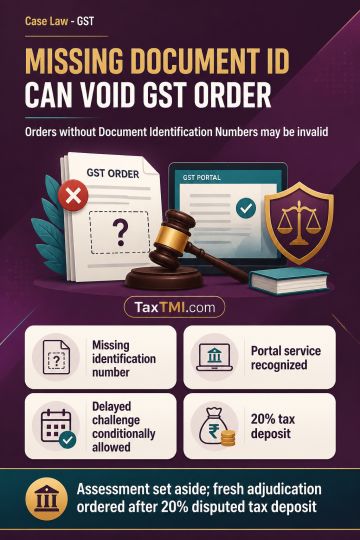
Document Identification Number defects can invalidate GST assessments, with delayed challenges entertained conditionally where patent irregularities e...
Windmill commissioning evidence supported higher depreciation where grid connection and electricity generation proved operational use before the relev...
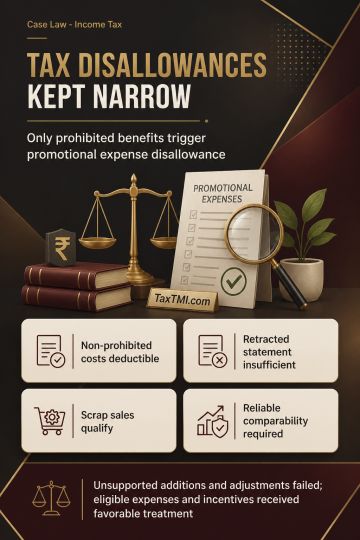
Pharmaceutical promotion and transfer-pricing comparability principles limited disallowances, while uncorroborated search allegations and unsupported ...
Business expenditure substantiation supports scrap credits, statutory payments and expense claims, while depreciation requires proof of actual busines...
Corporate guarantees issued by a company to secure loans for its subsidiaries were held not to constitute a taxable supply of service where no fee, commission, security or other consideration was received or payable. The Court treated the guarantees as in-house financial support, not a regular business of providing guarantees, and quashed the summons and show cause notice founded on GST demand. By contrast, the constitutional challenge to Rule 28(2) of the GST valuation rules failed because fiscal legislation and delegated tax measures are entitled to wide legislative deference, and no clear constitutional transgression was shown. The petition was therefore partly allowed.
Corporate guarantees issued by a company to secure loans for its subsidiaries were held not to constitute a taxable supply of service where no fee, commission, security or other consideration was received or payable. The Court treated the guarantees as in-house financial support, not a regular business of providing guarantees, and quashed the summons and show cause notice founded on GST demand. By contrast, the constitutional challenge to Rule 28(2) of the GST valuation rules failed because fiscal legislation and delegated tax measures are entitled to wide legislative deference, and no clear constitutional transgression was shown. The petition was therefore partly allowed.
Note: It is a system-generated summary and is for quick reference only.
 TaxTMI
 of 4790















 Join Channel


 TaxTMI
