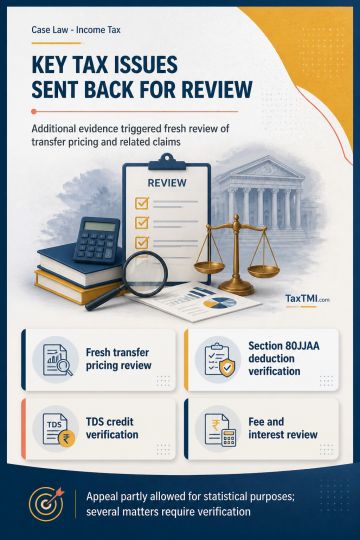
Additional evidence in transfer pricing dispute leads to fresh examination, while tax deductions, TDS credit, fee and refund interest require verifica...
Category II AIF pass-through taxation preserves non-business income character; investment receipts cannot be reclassified without applying recognised ...
Mutual fund maturity rules require proper rollover, redemption, disclosure, and due diligence; investor gains cannot excuse regulatory breaches or pen...
Threshold exemption excludes exempt services, while stamp-paper purchases avoid reverse charge; consequential service tax penalties were also set asid...
Employee conflict disclosures and investment restrictions expand with new recusal duties, post-employment limits, and compliance reporting requirement...
A jurisdictional objection based on the statutory bar against parallel proceedings was rejected as premature because no material was produced to show initiation of adjudicatory proceedings, identity of subject matter, tax period, or cause of action; a writ court could not record even a prima facie finding without such foundational facts. The challenge to provisional attachment for want of a pre-decisional hearing also failed, as Section 83 was treated as not requiring prior notice and the statutory scheme was held to provide a complete post-decisional remedy under Rule 159(5). The petitioner's custody at the time of attachment did not, by itself, invalidate the action, and writ interference was declined.
A jurisdictional objection based on the statutory bar against parallel proceedings was rejected as premature because no material was produced to show initiation of adjudicatory proceedings, identity of subject matter, tax period, or cause of action; a writ court could not record even a prima facie finding without such foundational facts. The challenge to provisional attachment for want of a pre-decisional hearing also failed, as Section 83 was treated as not requiring prior notice and the statutory scheme was held to provide a complete post-decisional remedy under Rule 159(5). The petitioner's custody at the time of attachment did not, by itself, invalidate the action, and writ interference was declined.
Note: It is a system-generated summary and is for quick reference only.
 TaxTMI
 of 4803



















 Join Channel


 TaxTMI
