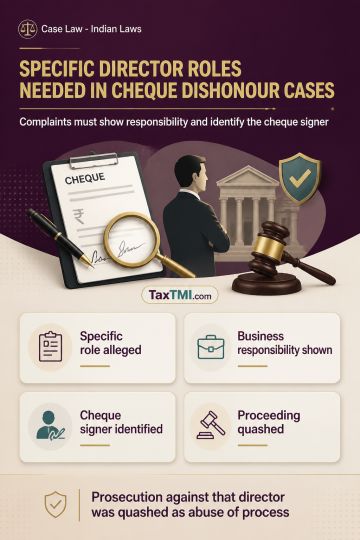
Vicarious liability for cheque dishonour requires specific allegations of responsibility and cheque signatory; generic director allegations cannot sus...
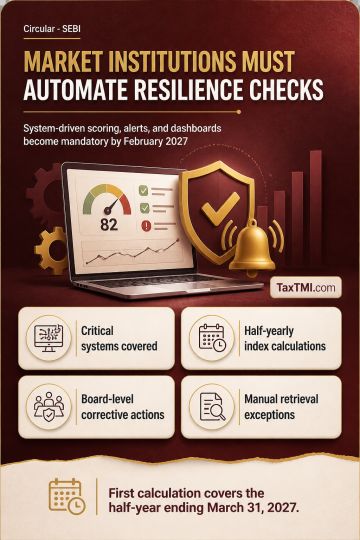
IT Resilience Index requires market infrastructure institutions to automate resilience scoring, early warnings, and continuous service-delivery monito...
The High Court held that the statutory presumption under the Negotiable Instruments Act applied once bank records proved presentation and dishonour of the cheque, and the demand notice was admittedly received. The absence of a reverse signature, deposit slip, or a dishonour entry in the account statement did not discredit the bank evidence, particularly where the branch merger and CBS procedure explained the transaction trail. The accused failed to rebut the presumption on a preponderance of probabilities, so the existence of debt and liability was proved. The Court also held that revisional jurisdiction does not permit reappreciation of evidence absent perversity, jurisdictional error, or failure of justice, and therefore upheld the concurrent conviction and sentence.
The High Court held that the statutory presumption under the Negotiable Instruments Act applied once bank records proved presentation and dishonour of the cheque, and the demand notice was admittedly received. The absence of a reverse signature, deposit slip, or a dishonour entry in the account statement did not discredit the bank evidence, particularly where the branch merger and CBS procedure explained the transaction trail. The accused failed to rebut the presumption on a preponderance of probabilities, so the existence of debt and liability was proved. The Court also held that revisional jurisdiction does not permit reappreciation of evidence absent perversity, jurisdictional error, or failure of justice, and therefore upheld the concurrent conviction and sentence.
Note: It is a system-generated summary and is for quick reference only.
 TaxTMI
  TaxTMI
 of 4819








 Join Channel