Donor-directed corpus contributions retain capital character despite exemption claims under section 10(23C)(vi), preventing their treatment as taxable...
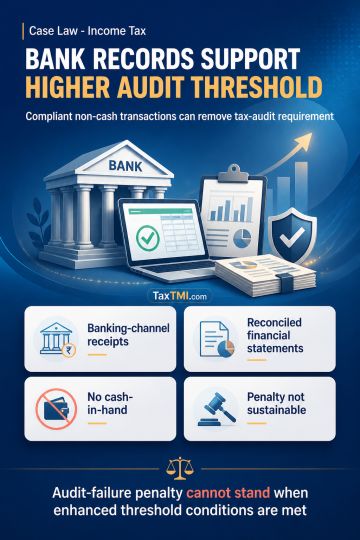
Enhanced tax-audit threshold applies where banking records establish compliant non-cash receipts and payments, eliminating penalty exposure for audit ...
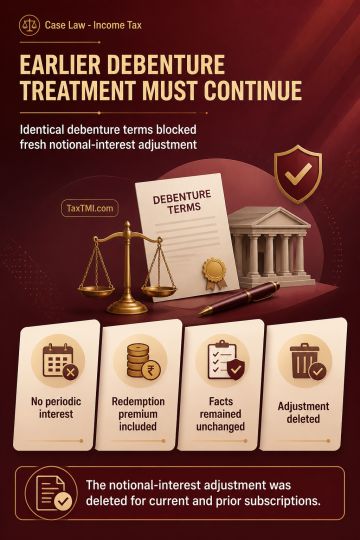
Transfer pricing consistency protects identical non-interest-bearing debenture terms from a later notional-interest adjustment without valid statutory...
Rectification of debatable deduction claims cannot reverse scrutiny-approved co-operative society interest income deductions as apparent record errors...
Cash-method accounting bars presumptive interest taxation, while unsupported securities and share-trading additions require reliable material and veri...
The High Court held that the statutory presumption under the Negotiable Instruments Act applied once bank records proved presentation and dishonour of the cheque, and the demand notice was admittedly received. The absence of a reverse signature, deposit slip, or a dishonour entry in the account statement did not discredit the bank evidence, particularly where the branch merger and CBS procedure explained the transaction trail. The accused failed to rebut the presumption on a preponderance of probabilities, so the existence of debt and liability was proved. The Court also held that revisional jurisdiction does not permit reappreciation of evidence absent perversity, jurisdictional error, or failure of justice, and therefore upheld the concurrent conviction and sentence.
The High Court held that the statutory presumption under the Negotiable Instruments Act applied once bank records proved presentation and dishonour of the cheque, and the demand notice was admittedly received. The absence of a reverse signature, deposit slip, or a dishonour entry in the account statement did not discredit the bank evidence, particularly where the branch merger and CBS procedure explained the transaction trail. The accused failed to rebut the presumption on a preponderance of probabilities, so the existence of debt and liability was proved. The Court also held that revisional jurisdiction does not permit reappreciation of evidence absent perversity, jurisdictional error, or failure of justice, and therefore upheld the concurrent conviction and sentence.
Note: It is a system-generated summary and is for quick reference only.
 TaxTMI
  TaxTMI
 of 4817

















 Join Channel