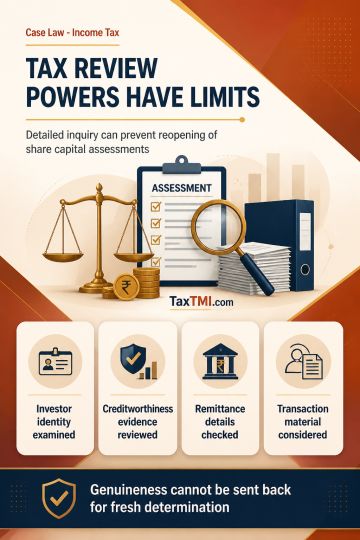
Revisionary jurisdiction cannot reopen share capital assessments where adequate inquiry supports a permissible view and no independent error is establ...
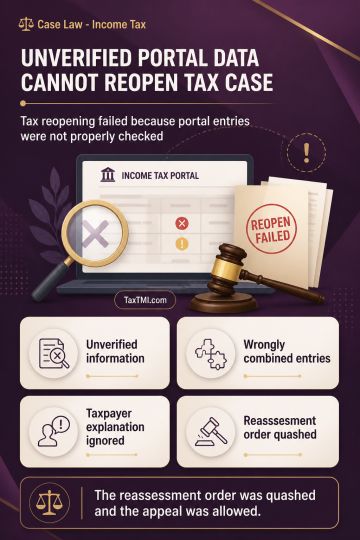
Reassessment jurisdiction fails where unverified portal information is aggregated without examining the taxpayer's explanation or relevance of entries...
Statutory sanction for delayed reassessment requires approval from the prescribed authority; approval by an inferior authority invalidates jurisdictio...
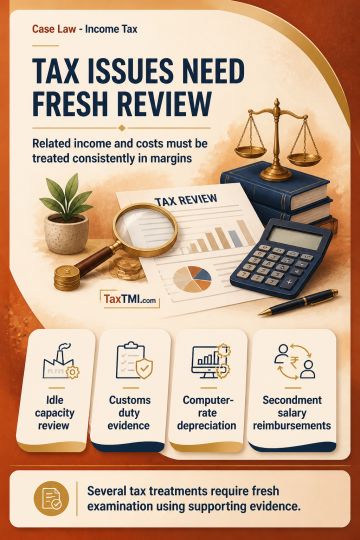
Transfer pricing margin adjustments require matching treatment of non-operating income and related costs, with comparability issues reconsidered on ev...
Preliminary-expense amortisation and MAT exempt-income adjustments prevailed, while trademark costs and managerial remuneration require fresh verifica...
Export valuation requires contemporaneous evidence; unrelated invoices cannot prove overvaluation, and dual penalties on firm and partner are impermis...
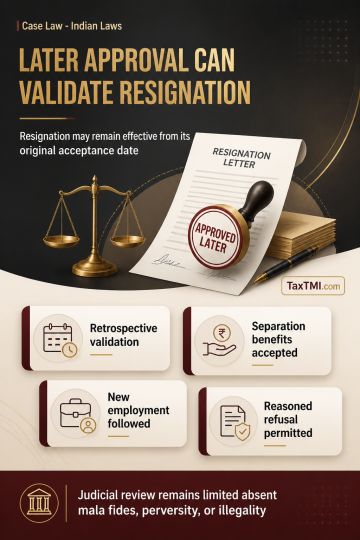
Ratification of resignation acceptance validates separation retrospectively, while withdrawal may be refused through reasoned administrative discretio...
Default imprisonment for non-payment of compensation under the Negotiable Instruments Act was treated as subject to the same statutory ceiling that applies to default imprisonment for fine, so a twelve-month default term in each complaint was illegal where the offence under Section 138 carried a maximum two-year sentence. The court also stated that default sentences for non-payment of fine or compensation cannot run concurrently. However, imposing aggregate default imprisonment far exceeding the substantive sentence solely because compensation remained unpaid was found disproportionate and inconsistent with Article 21. The default term was reduced to the period already undergone, while compensation liability was left recoverable.
Default imprisonment for non-payment of compensation under the Negotiable Instruments Act was treated as subject to the same statutory ceiling that applies to default imprisonment for fine, so a twelve-month default term in each complaint was illegal where the offence under Section 138 carried a maximum two-year sentence. The court also stated that default sentences for non-payment of fine or compensation cannot run concurrently. However, imposing aggregate default imprisonment far exceeding the substantive sentence solely because compensation remained unpaid was found disproportionate and inconsistent with Article 21. The default term was reduced to the period already undergone, while compensation liability was left recoverable.
Note: It is a system-generated summary and is for quick reference only.
 TaxTMI
  TaxTMI
 of 4817














 Join Channel


