Defined public benefit can retain charitable character; registration renewal requires examining genuine activities and legal compliance, not surplus a...
Capital reduction is distinct from share buy-back, preventing buy-back tax; restructuring interest and related business deductions also survive scruti...
Transfer pricing and tax deductions upheld on established principles, while employee contributions and warranty provisions returned for fresh examinat...
Captive transfer pricing relies on industrial consumer tariffs, while genuine quotations can benchmark effluent treatment transfers under the Other Me...
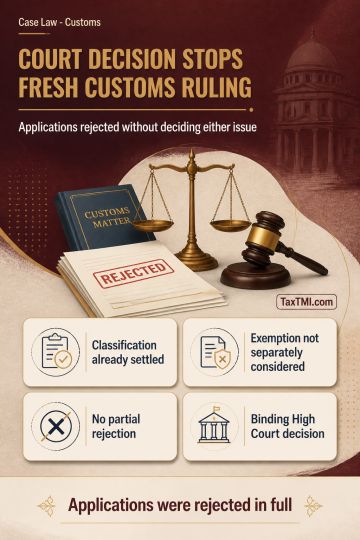
Specific tariff classification for ophthalmic instruments and extended limitation principles determine the treatment of duty demands, confiscation, an...
Integrated golf function determines classification, placing launch monitors and simulators under other golf equipment rather than measuring instrument...
Regulated entities in the securities market are advised to strengthen cyber resilience against AI-driven vulnerability detection tools by updating systems and applications promptly, using virtual patching where needed, and conducting regular vulnerability assessments, security audits, and scenario-based risk assessments. They should coordinate with third-party vendors to release and deploy patches, harden systems, secure APIs through authentication, authorization, rate limiting and whitelisting, and maintain continuous SOC monitoring with tested SOAR/SIEM responses. The advisory also requires updated asset inventories and software bills of materials, onboarding to the Market SOC where applicable, and long-term planning for AI use in detection and autonomous mitigation, in line with SEBI's cyber security framework.
Regulated entities in the securities market are advised to strengthen cyber resilience against AI-driven vulnerability detection tools by updating systems and applications promptly, using virtual patching where needed, and conducting regular vulnerability assessments, security audits, and scenario-based risk assessments. They should coordinate with third-party vendors to release and deploy patches, harden systems, secure APIs through authentication, authorization, rate limiting and whitelisting, and maintain continuous SOC monitoring with tested SOAR/SIEM responses. The advisory also requires updated asset inventories and software bills of materials, onboarding to the Market SOC where applicable, and long-term planning for AI use in detection and autonomous mitigation, in line with SEBI's cyber security framework.
Note: It is a system-generated summary and is for quick reference only.
 TaxTMI
  TaxTMI
 of 4809

















 Join Channel