Dispute Resolution Panel objections must reach both prescribed forums; otherwise assessment may proceed and statutory appeal remains the proper remedy...
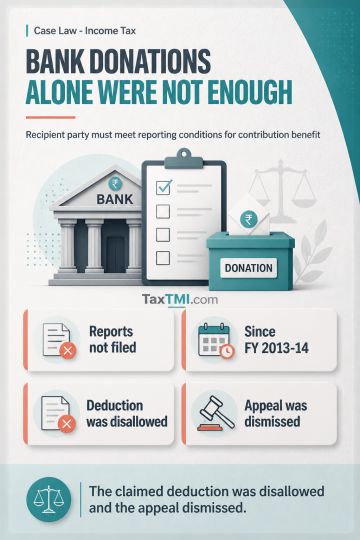
Political contribution deductions require recipient party compliance with contribution-reporting conditions; banking-channel donations alone do not qu...
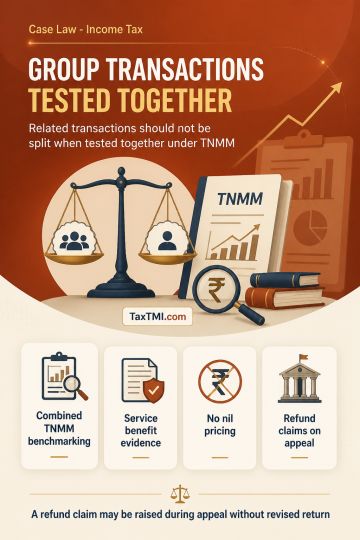
Aggregation under TNMM prevents selective testing of intra-group services without comparable uncontrolled transactions, while appellate additional cla...
Protective assessment cannot duplicate identical receipts under competing characterisations; remote services did not establish a taxable permanent est...
Current account treatment of overseas tournament services removed most FEMA findings, but excess EEFC remittance and delayed repatriation remained bre...
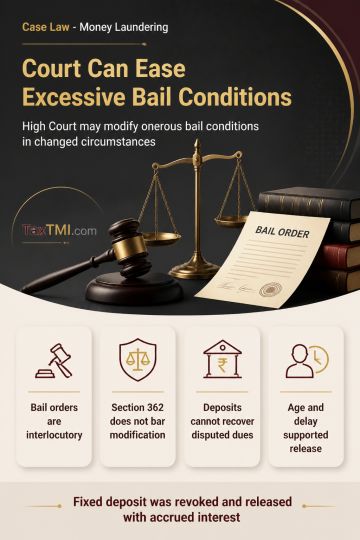
Modification of bail conditions remains available through inherent jurisdiction where onerous deposits undermine justice and cannot recover disputed d...
Page of 4814
Press 'Enter' after typing page number.
901 to 920 of 96262 Results
❮
❯
❯❯
0 / 200
Expand Note
Add to Folder
No Folders have been created
+
Are you sure you want to delete "My most important" ?
Regulated entities in the securities market are advised to strengthen cyber resilience against AI-driven vulnerability detection tools by updating systems and applications promptly, using virtual patching where needed, and conducting regular vulnerability assessments, security audits, and scenario-based risk assessments. They should coordinate with third-party vendors to release and deploy patches, harden systems, secure APIs through authentication, authorization, rate limiting and whitelisting, and maintain continuous SOC monitoring with tested SOAR/SIEM responses. The advisory also requires updated asset inventories and software bills of materials, onboarding to the Market SOC where applicable, and long-term planning for AI use in detection and autonomous mitigation, in line with SEBI's cyber security framework.
Regulated entities in the securities market are advised to strengthen cyber resilience against AI-driven vulnerability detection tools by updating systems and applications promptly, using virtual patching where needed, and conducting regular vulnerability assessments, security audits, and scenario-based risk assessments. They should coordinate with third-party vendors to release and deploy patches, harden systems, secure APIs through authentication, authorization, rate limiting and whitelisting, and maintain continuous SOC monitoring with tested SOAR/SIEM responses. The advisory also requires updated asset inventories and software bills of materials, onboarding to the Market SOC where applicable, and long-term planning for AI use in detection and autonomous mitigation, in line with SEBI's cyber security framework.
Note: It is a system-generated summary and is for quick reference only.
 TaxTMI
  TaxTMI
 of 4814











 Join Channel


