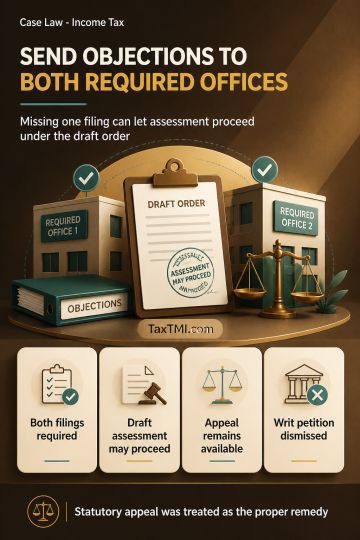
Dispute Resolution Panel objections must reach both prescribed forums; otherwise assessment may proceed and statutory appeal remains the proper remedy...
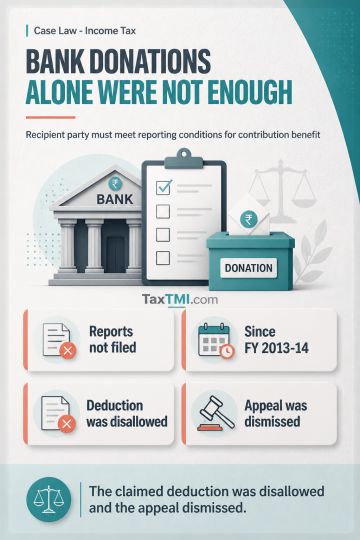
Political contribution deductions require recipient party compliance with contribution-reporting conditions; banking-channel donations alone do not qu...
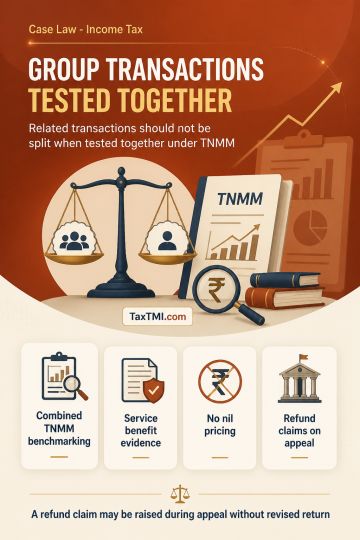
Aggregation under TNMM prevents selective testing of intra-group services without comparable uncontrolled transactions, while appellate additional cla...
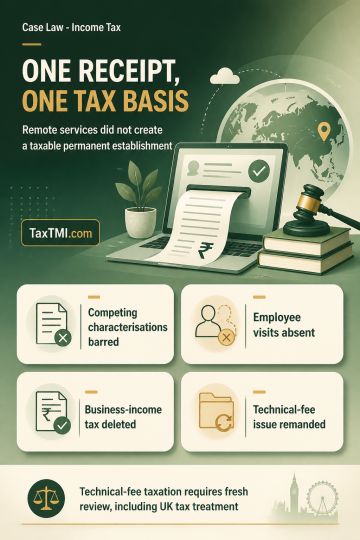
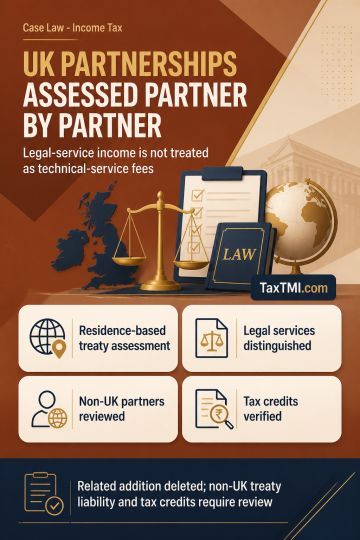
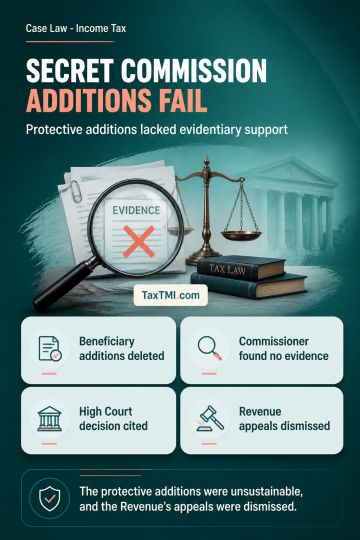
Protective assessment cannot duplicate identical receipts under competing characterisations; remote services did not establish a taxable permanent est...
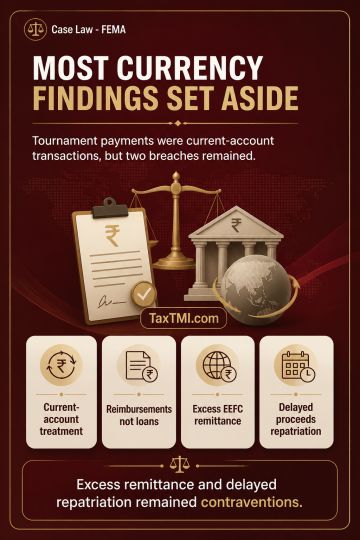
Current account treatment of overseas tournament services removed most FEMA findings, but excess EEFC remittance and delayed repatriation remained bre...
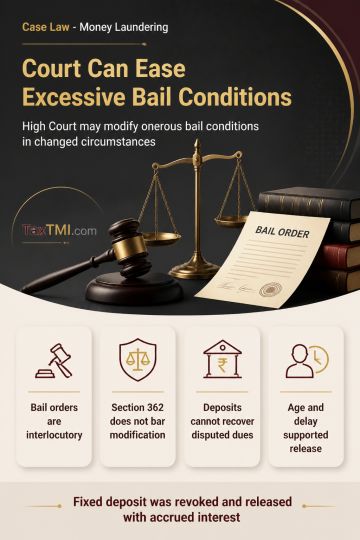
Modification of bail conditions remains available through inherent jurisdiction where onerous deposits undermine justice and cannot recover disputed d...
Page of 4789
Press 'Enter' after typing page number.
421 to 440 of 95770 Results
❮
❯
❯❯
0 / 200
Expand Note
Add to Folder
No Folders have been created
+
Are you sure you want to delete "My most important" ?
Grant-in-aid from CCRAS was treated as consideration because the payments were linked to approved proposals, deliverables, reporting, audits and specified research work, and the subsidy exclusion for Government grants did not extend by implication. The appellant and CCRAS were separate legal persons, so the research work constituted supply between distinct taxable persons in the course of business, and the appellant was not a pure agent. Exemption under Entries 3 and 3A was denied because the services were research and documentation for a central research body, not functions entrusted to Panchayat or Municipality bodies. The work was classified as taxable research and development services under Heading 9981, and the appeal was rejected.
Grant-in-aid from CCRAS was treated as consideration because the payments were linked to approved proposals, deliverables, reporting, audits and specified research work, and the subsidy exclusion for Government grants did not extend by implication. The appellant and CCRAS were separate legal persons, so the research work constituted supply between distinct taxable persons in the course of business, and the appellant was not a pure agent. Exemption under Entries 3 and 3A was denied because the services were research and documentation for a central research body, not functions entrusted to Panchayat or Municipality bodies. The work was classified as taxable research and development services under Heading 9981, and the appeal was rejected.
Note: It is a system-generated summary and is for quick reference only.
 TaxTMI
 of 4789





 Join Channel


 TaxTMI
