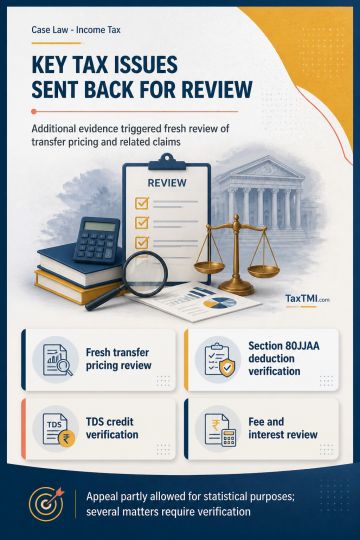
Additional evidence in transfer pricing dispute leads to fresh examination, while tax deductions, TDS credit, fee and refund interest require verifica...
Category II AIF pass-through taxation preserves non-business income character; investment receipts cannot be reclassified without applying recognised ...
Mutual fund maturity rules require proper rollover, redemption, disclosure, and due diligence; investor gains cannot excuse regulatory breaches or pen...
Threshold exemption excludes exempt services, while stamp-paper purchases avoid reverse charge; consequential service tax penalties were also set asid...
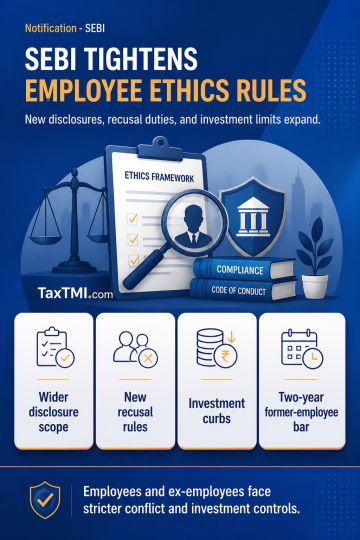
Employee conflict disclosures and investment restrictions expand with new recusal duties, post-employment limits, and compliance reporting requirement...
A scrutiny notice issued without established prior administrative approval was held void ab initio, and the resulting assessment under section 143(3) was annulled for want of jurisdiction. Additions based on third-party seized material also failed because the Assessing Officer had not recorded the requisite satisfaction with competent approval, so the statutory jurisdictional preconditions were not met. The first appellate authority exceeded its power by converting an unexplained-money addition into a trading addition and by introducing a new basis of assessment. Alleged suppressed sales, unexplained money, unaccounted purchases, and estimated unexplained expenditure were deleted because the loose papers were uncorroborated, cross-examination weakened the nexus, and section 69C was applied on conjecture rather than proof.
A scrutiny notice issued without established prior administrative approval was held void ab initio, and the resulting assessment under section 143(3) was annulled for want of jurisdiction. Additions based on third-party seized material also failed because the Assessing Officer had not recorded the requisite satisfaction with competent approval, so the statutory jurisdictional preconditions were not met. The first appellate authority exceeded its power by converting an unexplained-money addition into a trading addition and by introducing a new basis of assessment. Alleged suppressed sales, unexplained money, unaccounted purchases, and estimated unexplained expenditure were deleted because the loose papers were uncorroborated, cross-examination weakened the nexus, and section 69C was applied on conjecture rather than proof.
Note: It is a system-generated summary and is for quick reference only.
 TaxTMI
  TaxTMI
 of 4811

















 Join Channel


