Transfer pricing and tax deductions upheld on established principles, while employee contributions and warranty provisions returned for fresh examinat...
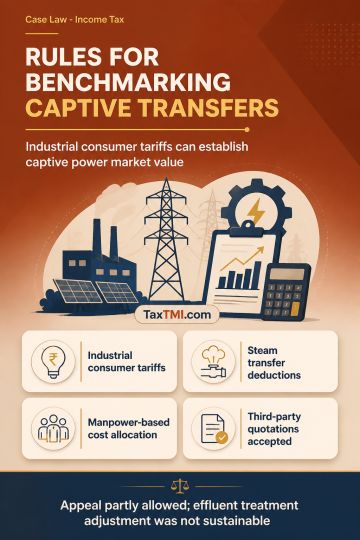
Captive transfer pricing relies on industrial consumer tariffs, while genuine quotations can benchmark effluent treatment transfers under the Other Me...
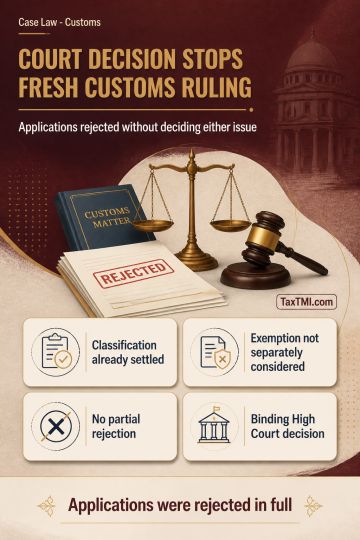
Specific tariff classification for ophthalmic instruments and extended limitation principles determine the treatment of duty demands, confiscation, an...
Integrated golf function determines classification, placing launch monitors and simulators under other golf equipment rather than measuring instrument...
Public servant status under anti-corruption law extends to recognised stock exchange leadership; constitutional and sanction challenges do not succeed...
Acquiescence, homebuyer protection and clean-slate resolution principles prevent landowners from disrupting an integrated project through late termina...
A scrutiny notice issued without established prior administrative approval was held void ab initio, and the resulting assessment under section 143(3) was annulled for want of jurisdiction. Additions based on third-party seized material also failed because the Assessing Officer had not recorded the requisite satisfaction with competent approval, so the statutory jurisdictional preconditions were not met. The first appellate authority exceeded its power by converting an unexplained-money addition into a trading addition and by introducing a new basis of assessment. Alleged suppressed sales, unexplained money, unaccounted purchases, and estimated unexplained expenditure were deleted because the loose papers were uncorroborated, cross-examination weakened the nexus, and section 69C was applied on conjecture rather than proof.
A scrutiny notice issued without established prior administrative approval was held void ab initio, and the resulting assessment under section 143(3) was annulled for want of jurisdiction. Additions based on third-party seized material also failed because the Assessing Officer had not recorded the requisite satisfaction with competent approval, so the statutory jurisdictional preconditions were not met. The first appellate authority exceeded its power by converting an unexplained-money addition into a trading addition and by introducing a new basis of assessment. Alleged suppressed sales, unexplained money, unaccounted purchases, and estimated unexplained expenditure were deleted because the loose papers were uncorroborated, cross-examination weakened the nexus, and section 69C was applied on conjecture rather than proof.
Note: It is a system-generated summary and is for quick reference only.
 TaxTMI
  TaxTMI
 of 4811















 Join Channel


