Dispute Resolution Panel objections must reach both prescribed forums; otherwise assessment may proceed and statutory appeal remains the proper remedy...
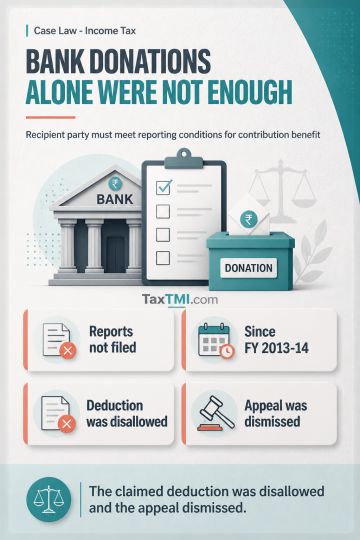
Political contribution deductions require recipient party compliance with contribution-reporting conditions; banking-channel donations alone do not qu...
Aggregation under TNMM prevents selective testing of intra-group services without comparable uncontrolled transactions, while appellate additional cla...
Protective assessment cannot duplicate identical receipts under competing characterisations; remote services did not establish a taxable permanent est...
Current account treatment of overseas tournament services removed most FEMA findings, but excess EEFC remittance and delayed repatriation remained bre...
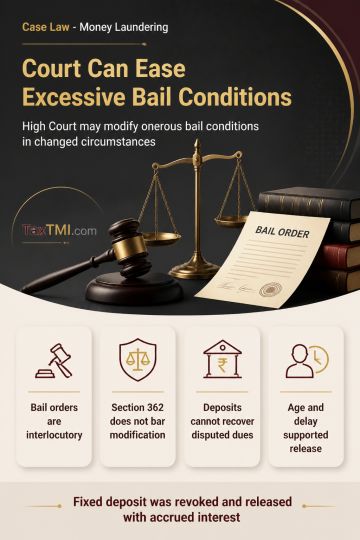
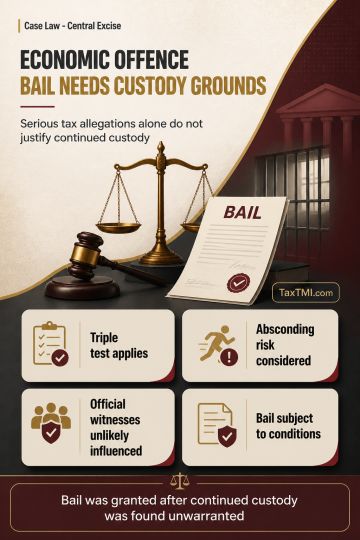
Modification of bail conditions remains available through inherent jurisdiction where onerous deposits undermine justice and cannot recover disputed d...
A scrutiny notice issued without established prior administrative approval was held void ab initio, and the resulting assessment under section 143(3) was annulled for want of jurisdiction. Additions based on third-party seized material also failed because the Assessing Officer had not recorded the requisite satisfaction with competent approval, so the statutory jurisdictional preconditions were not met. The first appellate authority exceeded its power by converting an unexplained-money addition into a trading addition and by introducing a new basis of assessment. Alleged suppressed sales, unexplained money, unaccounted purchases, and estimated unexplained expenditure were deleted because the loose papers were uncorroborated, cross-examination weakened the nexus, and section 69C was applied on conjecture rather than proof.
A scrutiny notice issued without established prior administrative approval was held void ab initio, and the resulting assessment under section 143(3) was annulled for want of jurisdiction. Additions based on third-party seized material also failed because the Assessing Officer had not recorded the requisite satisfaction with competent approval, so the statutory jurisdictional preconditions were not met. The first appellate authority exceeded its power by converting an unexplained-money addition into a trading addition and by introducing a new basis of assessment. Alleged suppressed sales, unexplained money, unaccounted purchases, and estimated unexplained expenditure were deleted because the loose papers were uncorroborated, cross-examination weakened the nexus, and section 69C was applied on conjecture rather than proof.
Note: It is a system-generated summary and is for quick reference only.
 TaxTMI
  TaxTMI
 of 4816














 Join Channel


