Opportunity to furnish unsecured-loan confirmations is required before reassessment initiation; proceedings require fresh consideration after taxpayer...
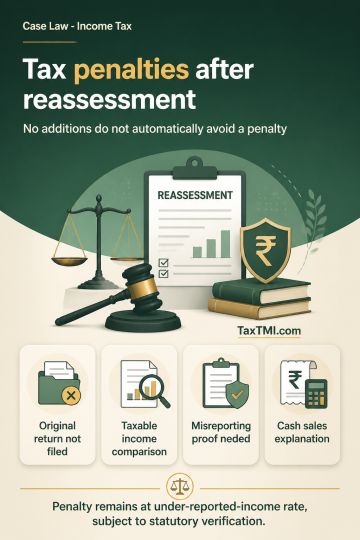
Under-reporting on a first reassessment return attracts penalty, while enhanced misreporting penalty requires proof of a statutory misreporting catego...
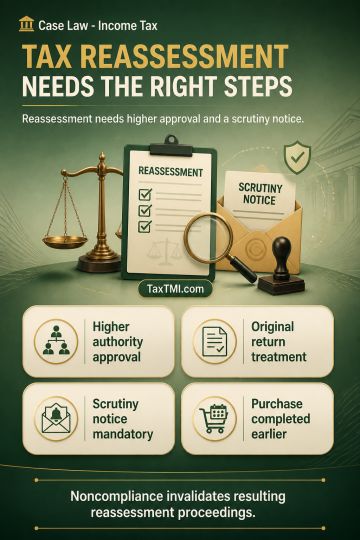
A scrutiny notice issued without established prior administrative approval was held void ab initio, and the resulting assessment under section 143(3) was annulled for want of jurisdiction. Additions based on third-party seized material also failed because the Assessing Officer had not recorded the requisite satisfaction with competent approval, so the statutory jurisdictional preconditions were not met. The first appellate authority exceeded its power by converting an unexplained-money addition into a trading addition and by introducing a new basis of assessment. Alleged suppressed sales, unexplained money, unaccounted purchases, and estimated unexplained expenditure were deleted because the loose papers were uncorroborated, cross-examination weakened the nexus, and section 69C was applied on conjecture rather than proof.
A scrutiny notice issued without established prior administrative approval was held void ab initio, and the resulting assessment under section 143(3) was annulled for want of jurisdiction. Additions based on third-party seized material also failed because the Assessing Officer had not recorded the requisite satisfaction with competent approval, so the statutory jurisdictional preconditions were not met. The first appellate authority exceeded its power by converting an unexplained-money addition into a trading addition and by introducing a new basis of assessment. Alleged suppressed sales, unexplained money, unaccounted purchases, and estimated unexplained expenditure were deleted because the loose papers were uncorroborated, cross-examination weakened the nexus, and section 69C was applied on conjecture rather than proof.
Note: It is a system-generated summary and is for quick reference only.
 TaxTMI
  TaxTMI
 of 4915