Specified income of Baddi Barotiwala Nalagarh Development Authority receives conditional tax exemption, retrospectively covering its designated assess...
Specified development authority income receives retrospective tax exemption, subject to non-commercial activity, unchanged income sources, and return-...
Unified Brand India framework introduces voluntary Trust Mark certification and funding support for export branding, packaging and global promotional ...
Origin Declaration authentication governs preferential tariff claims under India-UK CETA, requiring a validated reference number before import clearan...
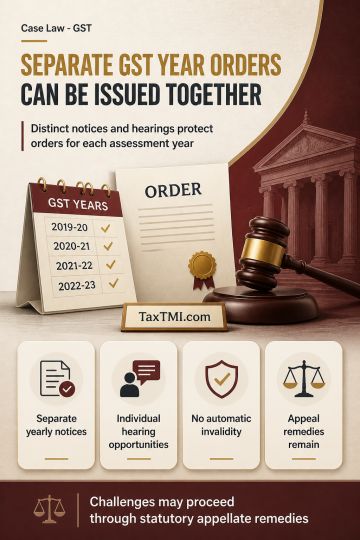
Separate assessment orders for different years remain valid when distinct notices and hearing opportunities prevent prejudice from combined proceeding...
Section 40(a)(ia) disallowance applies only to expenditure actually claimed as a deduction in computing business income; where TDS-defaulted amounts remained capitalised in work-in-progress and were not charged to the profit and loss account, no current-year disallowance was warranted. Even under the percentage completion method, the decisive question was whether the expense had entered the year's computation, and the balance had to be adjusted in work-in-progress to avoid later deduction without compliance. The audit report could not override the actual accounting treatment. The Tribunal therefore upheld the CIT(A)'s limited verification approach and dismissed the Revenue's appeal.
Section 40(a)(ia) disallowance applies only to expenditure actually claimed as a deduction in computing business income; where TDS-defaulted amounts remained capitalised in work-in-progress and were not charged to the profit and loss account, no current-year disallowance was warranted. Even under the percentage completion method, the decisive question was whether the expense had entered the year's computation, and the balance had to be adjusted in work-in-progress to avoid later deduction without compliance. The audit report could not override the actual accounting treatment. The Tribunal therefore upheld the CIT(A)'s limited verification approach and dismissed the Revenue's appeal.
Note: It is a system-generated summary and is for quick reference only.
 TaxTMI
  TaxTMI
 of 4809



















 Join Channel


