Input tax credit conditions remain constitutionally valid, with eligible recipient claims considered under GST circulars and retrospective filing dead...
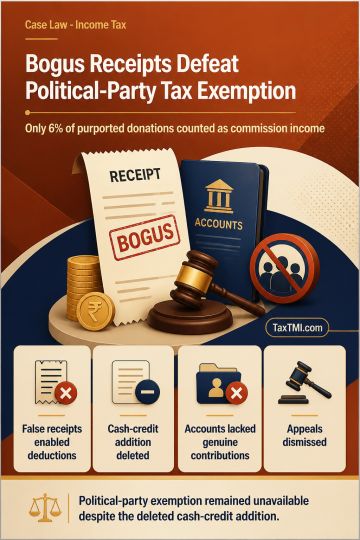
Bogus donation receipts justified commission income assessment and defeated political-party tax exemption for inaccurate accounts and reporting failur...
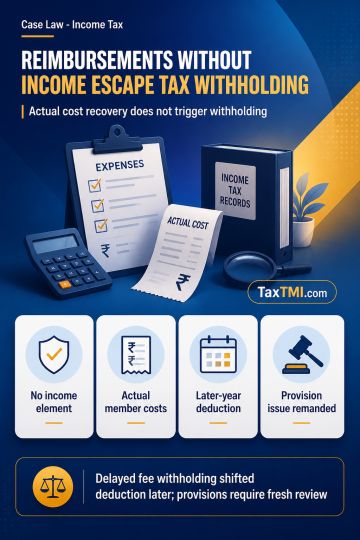
Pure reimbursement without income element escapes tax withholding, while delayed withholding and unsupported provisions face deferred or renewed scrut...
Public benefit requirement defeats charitable registration where residents' association services are reciprocal, member-only facilities governed by mu...
Exempt-income expenditure disallowance is confined to investments that actually generated exempt income, while supported business expenses remain dedu...
Section 40(a)(ia) disallowance applies only to expenditure actually claimed as a deduction in computing business income; where TDS-defaulted amounts remained capitalised in work-in-progress and were not charged to the profit and loss account, no current-year disallowance was warranted. Even under the percentage completion method, the decisive question was whether the expense had entered the year's computation, and the balance had to be adjusted in work-in-progress to avoid later deduction without compliance. The audit report could not override the actual accounting treatment. The Tribunal therefore upheld the CIT(A)'s limited verification approach and dismissed the Revenue's appeal.
Section 40(a)(ia) disallowance applies only to expenditure actually claimed as a deduction in computing business income; where TDS-defaulted amounts remained capitalised in work-in-progress and were not charged to the profit and loss account, no current-year disallowance was warranted. Even under the percentage completion method, the decisive question was whether the expense had entered the year's computation, and the balance had to be adjusted in work-in-progress to avoid later deduction without compliance. The audit report could not override the actual accounting treatment. The Tribunal therefore upheld the CIT(A)'s limited verification approach and dismissed the Revenue's appeal.
Note: It is a system-generated summary and is for quick reference only.
 TaxTMI
  TaxTMI
 of 4813
















 Join Channel


