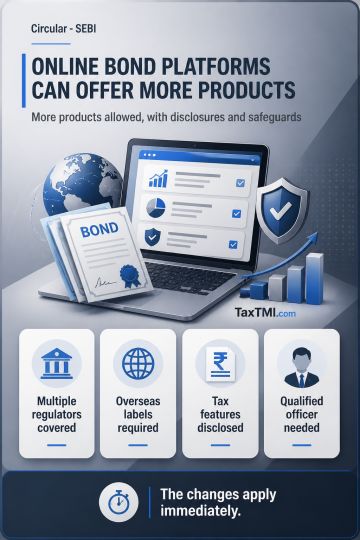
Online bond platforms may offer overseas-regulated products and tax-specific bonds subject to disclosures, compliance safeguards and revised complianc...
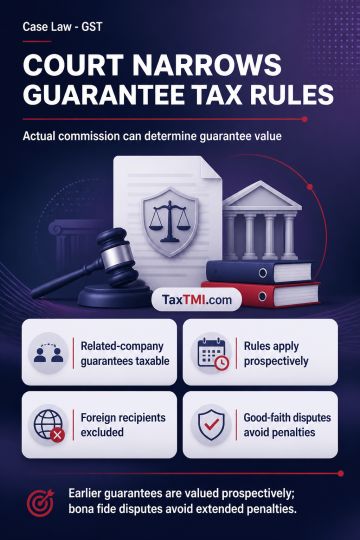
Corporate guarantee valuation permits actual ascertainable commission while barring retroactive application and extended-period penalties for bona fid...
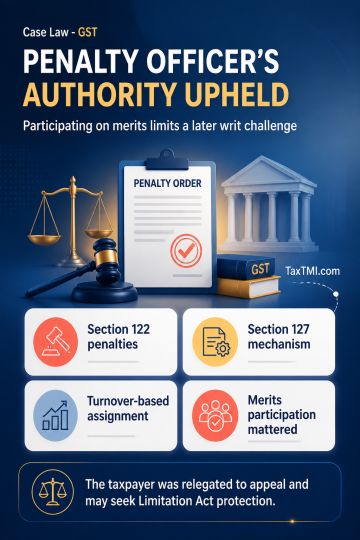
Proper-officer jurisdiction under UPGST penalty provisions upheld; participation on merits prevents bypassing the statutory appellate remedy through w...
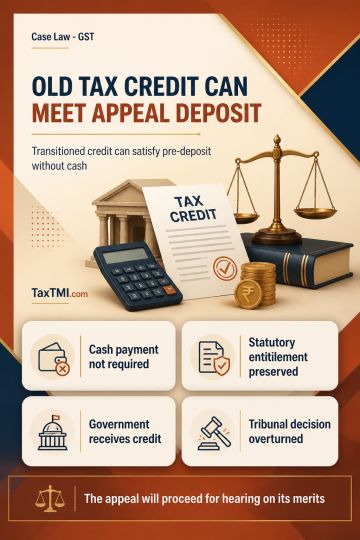
Transitioned CENVAT credit may validly satisfy mandatory pre-deposit requirements for legacy service tax appeals through Electronic Credit Ledger debi...
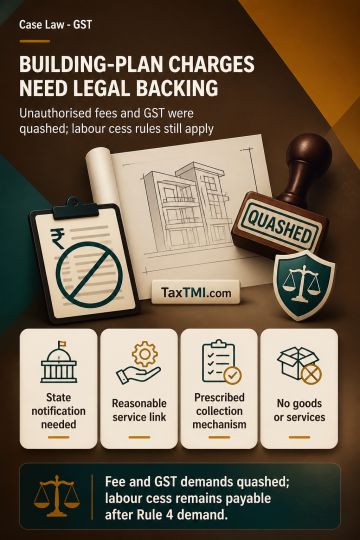
Building-plan sanction charges require statutory authority; unauthorised fees and GST were quashed, while labour cess must follow prescribed collectio...
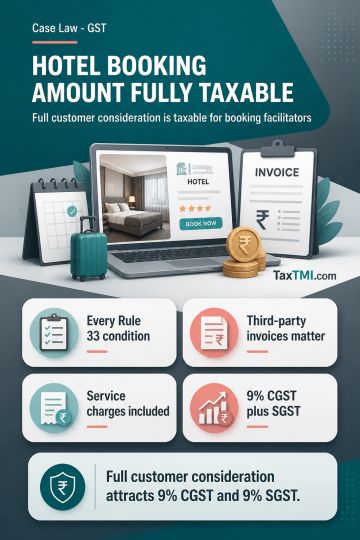
Pure-agent exclusion fails where hotel booking facilitators receive third-party services themselves, making entire customer consideration taxable as r...
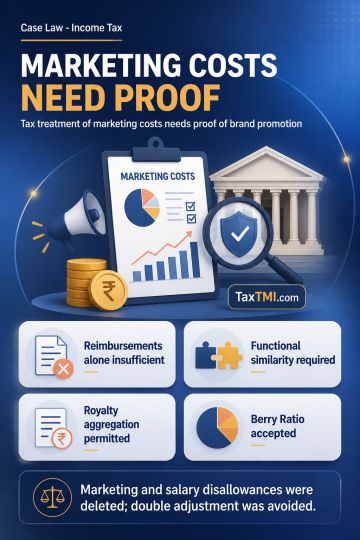
Transfer pricing requires evidence for AMP transactions, functionally reliable comparables, and appropriate aggregation or Berry Ratio benchmarking me...
CESTAT upheld penalty liability where the appellant admitted procuring third-party shipping bills for consideration and using them to falsely show fulfilment of EPCG export obligations. The Tribunal treated the cancelled licences and EODCs as confirming the fraudulent arrangement, and held that these acts rendered the goods liable to confiscation under section 111, attracting penalty under section 112(a). It also held that knowing use of false shipping bills and related documents in customs proceedings squarely attracted section 114AA. On proportionality, however, it considered the surrounding circumstances and reduced each penalty to Rs. 50,000, finding that amount sufficient to meet the ends of justice.
CESTAT upheld penalty liability where the appellant admitted procuring third-party shipping bills for consideration and using them to falsely show fulfilment of EPCG export obligations. The Tribunal treated the cancelled licences and EODCs as confirming the fraudulent arrangement, and held that these acts rendered the goods liable to confiscation under section 111, attracting penalty under section 112(a). It also held that knowing use of false shipping bills and related documents in customs proceedings squarely attracted section 114AA. On proportionality, however, it considered the surrounding circumstances and reduced each penalty to Rs. 50,000, finding that amount sufficient to meet the ends of justice.
Note: It is a system-generated summary and is for quick reference only.
 TaxTMI
  TaxTMI
 of 4817







 Join Channel


