Transfer pricing and tax deductions upheld on established principles, while employee contributions and warranty provisions returned for fresh examinat...
Captive transfer pricing relies on industrial consumer tariffs, while genuine quotations can benchmark effluent treatment transfers under the Other Me...
Specific tariff classification for ophthalmic instruments and extended limitation principles determine the treatment of duty demands, confiscation, an...
Integrated golf function determines classification, placing launch monitors and simulators under other golf equipment rather than measuring instrument...
Public servant status under anti-corruption law extends to recognised stock exchange leadership; constitutional and sanction challenges do not succeed...
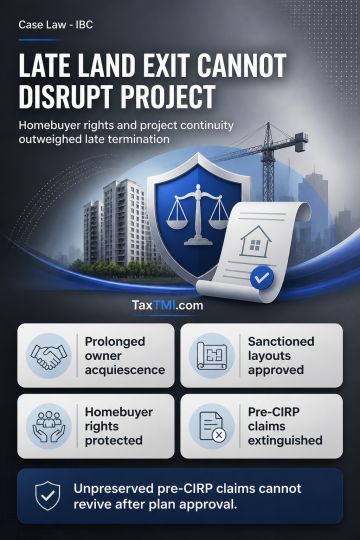
Acquiescence, homebuyer protection and clean-slate resolution principles prevent landowners from disrupting an integrated project through late termina...
Sections 397, 398 and 399 were construed in an equitable and remedial manner, so the expression "member" was not confined to formal entry in the register of members under Section 41(2). The SC accepted that Section 2(27) provides a wider membership framework and that strict insistence on register entry would defeat protection against oppression and mismanagement. On the facts, the company had consistently acknowledged the respondent's proprietary stake through correspondence, conciliation material, his appointment as Managing Director, rebranding linked to his concern, and acceptance of his investment. Those circumstances justified treating him as a member for the limited purpose of invoking the statutory remedy, and the appeals were dismissed.
Sections 397, 398 and 399 were construed in an equitable and remedial manner, so the expression "member" was not confined to formal entry in the register of members under Section 41(2). The SC accepted that Section 2(27) provides a wider membership framework and that strict insistence on register entry would defeat protection against oppression and mismanagement. On the facts, the company had consistently acknowledged the respondent's proprietary stake through correspondence, conciliation material, his appointment as Managing Director, rebranding linked to his concern, and acceptance of his investment. Those circumstances justified treating him as a member for the limited purpose of invoking the statutory remedy, and the appeals were dismissed.
Note: It is a system-generated summary and is for quick reference only.
 TaxTMI
  TaxTMI
 of 4811














 Join Channel