Specified regulatory authority income receives conditional tax exemption, subject to non-commercial activity, unchanged income character, and return f...
Tax exemption for regulatory authority income applies retrospectively, subject to non-commercial activity, unchanged income sources, and return-filing...
Input tax credit conditions remain constitutionally valid, with eligible recipient claims considered under GST circulars and retrospective filing dead...
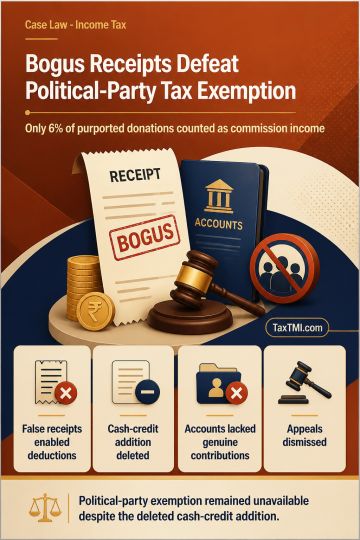
Bogus donation receipts justified commission income assessment and defeated political-party tax exemption for inaccurate accounts and reporting failur...
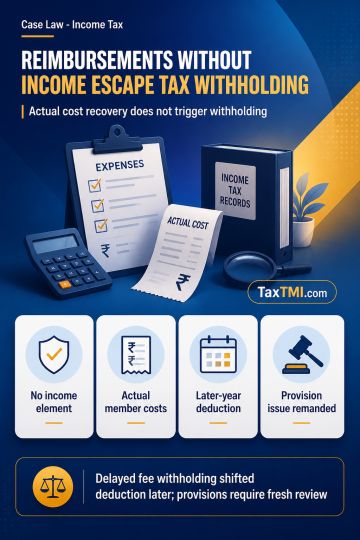
Pure reimbursement without income element escapes tax withholding, while delayed withholding and unsupported provisions face deferred or renewed scrut...
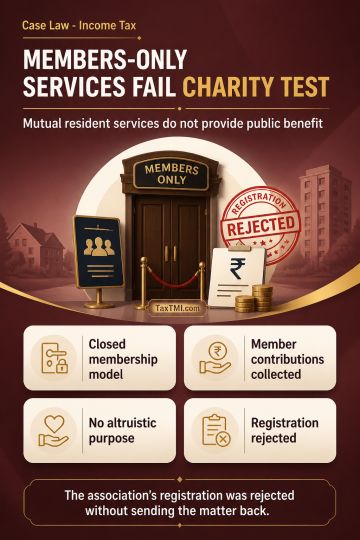
Public benefit requirement defeats charitable registration where residents' association services are reciprocal, member-only facilities governed by mu...
Sections 397, 398 and 399 were construed in an equitable and remedial manner, so the expression "member" was not confined to formal entry in the register of members under Section 41(2). The SC accepted that Section 2(27) provides a wider membership framework and that strict insistence on register entry would defeat protection against oppression and mismanagement. On the facts, the company had consistently acknowledged the respondent's proprietary stake through correspondence, conciliation material, his appointment as Managing Director, rebranding linked to his concern, and acceptance of his investment. Those circumstances justified treating him as a member for the limited purpose of invoking the statutory remedy, and the appeals were dismissed.
Sections 397, 398 and 399 were construed in an equitable and remedial manner, so the expression "member" was not confined to formal entry in the register of members under Section 41(2). The SC accepted that Section 2(27) provides a wider membership framework and that strict insistence on register entry would defeat protection against oppression and mismanagement. On the facts, the company had consistently acknowledged the respondent's proprietary stake through correspondence, conciliation material, his appointment as Managing Director, rebranding linked to his concern, and acceptance of his investment. Those circumstances justified treating him as a member for the limited purpose of invoking the statutory remedy, and the appeals were dismissed.
Note: It is a system-generated summary and is for quick reference only.
 TaxTMI
  TaxTMI
 of 4814













 Join Channel


