Revisionary jurisdiction cannot reopen share capital assessments where adequate inquiry supports a permissible view and no independent error is establ...
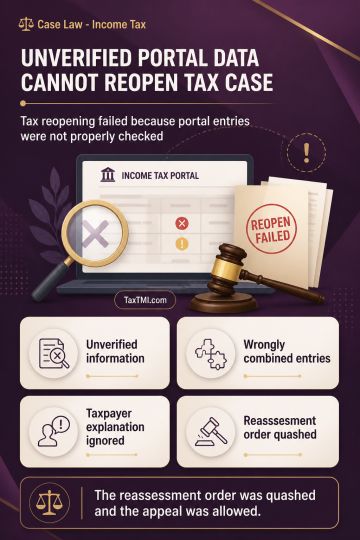
Reassessment jurisdiction fails where unverified portal information is aggregated without examining the taxpayer's explanation or relevance of entries...
Statutory sanction for delayed reassessment requires approval from the prescribed authority; approval by an inferior authority invalidates jurisdictio...
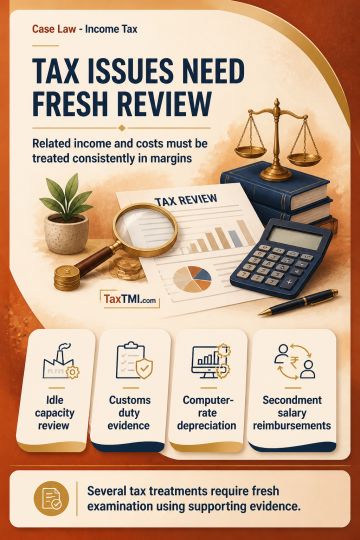
Transfer pricing margin adjustments require matching treatment of non-operating income and related costs, with comparability issues reconsidered on ev...
Preliminary-expense amortisation and MAT exempt-income adjustments prevailed, while trademark costs and managerial remuneration require fresh verifica...
Export valuation requires contemporaneous evidence; unrelated invoices cannot prove overvaluation, and dual penalties on firm and partner are impermis...
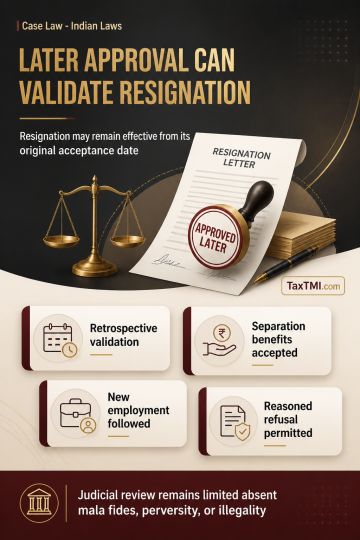
Ratification of resignation acceptance validates separation retrospectively, while withdrawal may be refused through reasoned administrative discretio...
Sections 397, 398 and 399 were construed in an equitable and remedial manner, so the expression "member" was not confined to formal entry in the register of members under Section 41(2). The SC accepted that Section 2(27) provides a wider membership framework and that strict insistence on register entry would defeat protection against oppression and mismanagement. On the facts, the company had consistently acknowledged the respondent's proprietary stake through correspondence, conciliation material, his appointment as Managing Director, rebranding linked to his concern, and acceptance of his investment. Those circumstances justified treating him as a member for the limited purpose of invoking the statutory remedy, and the appeals were dismissed.
Sections 397, 398 and 399 were construed in an equitable and remedial manner, so the expression "member" was not confined to formal entry in the register of members under Section 41(2). The SC accepted that Section 2(27) provides a wider membership framework and that strict insistence on register entry would defeat protection against oppression and mismanagement. On the facts, the company had consistently acknowledged the respondent's proprietary stake through correspondence, conciliation material, his appointment as Managing Director, rebranding linked to his concern, and acceptance of his investment. Those circumstances justified treating him as a member for the limited purpose of invoking the statutory remedy, and the appeals were dismissed.
Note: It is a system-generated summary and is for quick reference only.
 TaxTMI
  TaxTMI
 of 4817
















 Join Channel


