Online bond platforms may offer overseas-regulated products and tax-specific bonds subject to disclosures, compliance safeguards and revised complianc...
Corporate guarantee valuation permits actual ascertainable commission while barring retroactive application and extended-period penalties for bona fid...
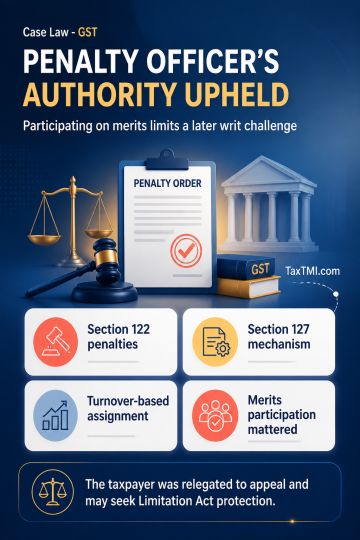
Proper-officer jurisdiction under UPGST penalty provisions upheld; participation on merits prevents bypassing the statutory appellate remedy through w...
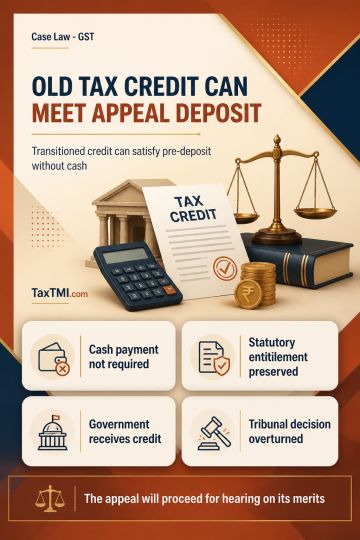
Transitioned CENVAT credit may validly satisfy mandatory pre-deposit requirements for legacy service tax appeals through Electronic Credit Ledger debi...
Building-plan sanction charges require statutory authority; unauthorised fees and GST were quashed, while labour cess must follow prescribed collectio...
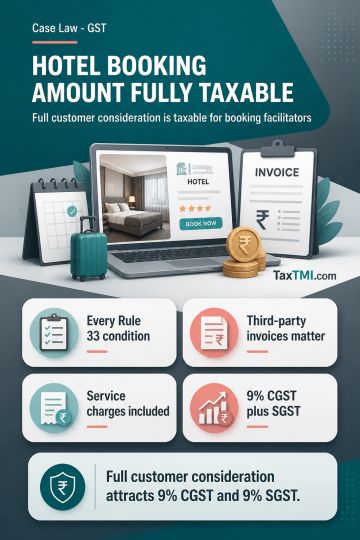
Pure-agent exclusion fails where hotel booking facilitators receive third-party services themselves, making entire customer consideration taxable as r...
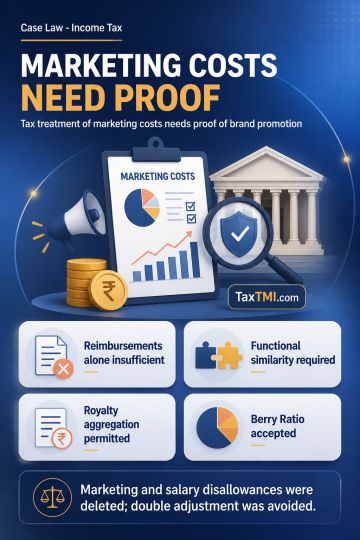
Transfer pricing requires evidence for AMP transactions, functionally reliable comparables, and appropriate aggregation or Berry Ratio benchmarking me...
Sections 397, 398 and 399 were construed in an equitable and remedial manner, so the expression "member" was not confined to formal entry in the register of members under Section 41(2). The SC accepted that Section 2(27) provides a wider membership framework and that strict insistence on register entry would defeat protection against oppression and mismanagement. On the facts, the company had consistently acknowledged the respondent's proprietary stake through correspondence, conciliation material, his appointment as Managing Director, rebranding linked to his concern, and acceptance of his investment. Those circumstances justified treating him as a member for the limited purpose of invoking the statutory remedy, and the appeals were dismissed.
Sections 397, 398 and 399 were construed in an equitable and remedial manner, so the expression "member" was not confined to formal entry in the register of members under Section 41(2). The SC accepted that Section 2(27) provides a wider membership framework and that strict insistence on register entry would defeat protection against oppression and mismanagement. On the facts, the company had consistently acknowledged the respondent's proprietary stake through correspondence, conciliation material, his appointment as Managing Director, rebranding linked to his concern, and acceptance of his investment. Those circumstances justified treating him as a member for the limited purpose of invoking the statutory remedy, and the appeals were dismissed.
Note: It is a system-generated summary and is for quick reference only.
 TaxTMI
  TaxTMI
 of 4817












 Join Channel


