Transfer pricing and tax deductions upheld on established principles, while employee contributions and warranty provisions returned for fresh examinat...
Captive transfer pricing relies on industrial consumer tariffs, while genuine quotations can benchmark effluent treatment transfers under the Other Me...
Specific tariff classification for ophthalmic instruments and extended limitation principles determine the treatment of duty demands, confiscation, an...
Integrated golf function determines classification, placing launch monitors and simulators under other golf equipment rather than measuring instrument...
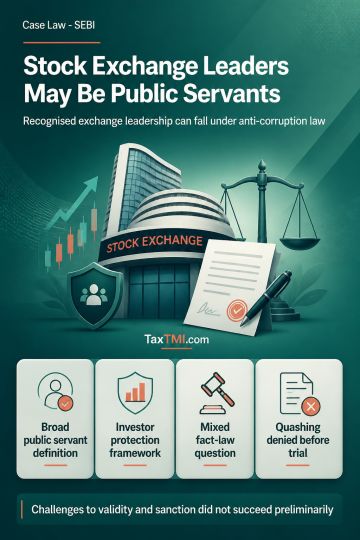
Public servant status under anti-corruption law extends to recognised stock exchange leadership; constitutional and sanction challenges do not succeed...
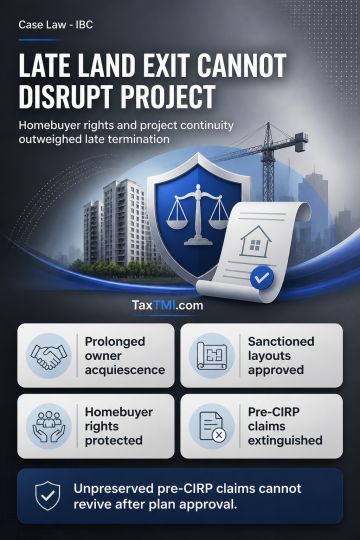
Acquiescence, homebuyer protection and clean-slate resolution principles prevent landowners from disrupting an integrated project through late termina...
Corporate guarantee and cost-overrun undertakings were interpreted as limited obligations to infuse equity, meet shortfalls, or cover specified contingencies; they did not create a liability to repay the principal borrower's loan, so a Section 7 petition against the corporate debtor was not maintainable on that basis. The tribunal also held that default of the principal borrower could not be treated as the guarantor's default; default arose only after invocation of the guarantee and non-payment thereafter, which on the bank's own case fell within the Section 10A suspension period. Non-consideration of the later guarantee deed and inconsistent treatment of the same transaction further indicated non-application of mind, making the admission order unsustainable.
Corporate guarantee and cost-overrun undertakings were interpreted as limited obligations to infuse equity, meet shortfalls, or cover specified contingencies; they did not create a liability to repay the principal borrower's loan, so a Section 7 petition against the corporate debtor was not maintainable on that basis. The tribunal also held that default of the principal borrower could not be treated as the guarantor's default; default arose only after invocation of the guarantee and non-payment thereafter, which on the bank's own case fell within the Section 10A suspension period. Non-consideration of the later guarantee deed and inconsistent treatment of the same transaction further indicated non-application of mind, making the admission order unsustainable.
Note: It is a system-generated summary and is for quick reference only.
 TaxTMI
  TaxTMI
 of 4811













 Join Channel


