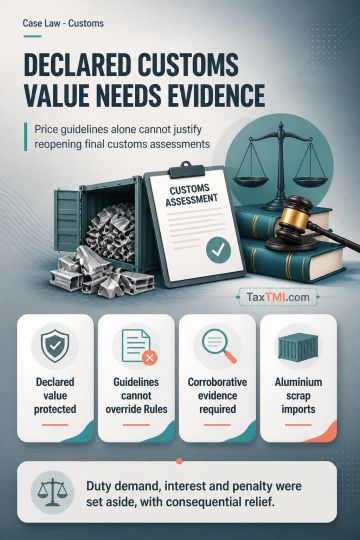
Transaction value cannot be rejected solely on non-statutory valuation guidelines without corroborative evidence supporting reassessment of final cust...
Cross-examination rights and corroborated evidence limit customs penalties for misdeclaration in genuine import transactions involving documented clea...
Tariff classification of vehicle gear components follows the specific gearing entry, displacing motor-vehicle parts classification and related liabili...
Necessary-party requirements limit impleadment of independent entities, while deferred consideration does not create an appealable adverse determinati...
Food supplement classification requires common parlance and authoritative tests, preventing treatment as proprietary Ayurvedic medicines without suppo...
Unpaid supply dues arising under a separate inter se agreement between joint venture partners constituted operational debt, because the contractual documents specifically allocated the supply obligation to the respondent and made payment contingent on receipt from OPTCL; the corporate debtor's acknowledgment of the balance payable confirmed liability, so admission of the Section 9 application was justified. The Section 10A objection failed because no factual foundation was laid below and the pleaded default date fell outside the protected period, making the statutory bar inapplicable. No pre-existing dispute was shown, as the correspondence relied on reflected acknowledgment of liability rather than a genuine dispute.
Unpaid supply dues arising under a separate inter se agreement between joint venture partners constituted operational debt, because the contractual documents specifically allocated the supply obligation to the respondent and made payment contingent on receipt from OPTCL; the corporate debtor's acknowledgment of the balance payable confirmed liability, so admission of the Section 9 application was justified. The Section 10A objection failed because no factual foundation was laid below and the pleaded default date fell outside the protected period, making the statutory bar inapplicable. No pre-existing dispute was shown, as the correspondence relied on reflected acknowledgment of liability rather than a genuine dispute.
Note: It is a system-generated summary and is for quick reference only.
 TaxTMI
  TaxTMI
 of 4816



















 Join Channel


