TNMM functional comparability requires excluding rice manufacturers from a pure Basmati rice trader's benchmark and recognising operating export recei...
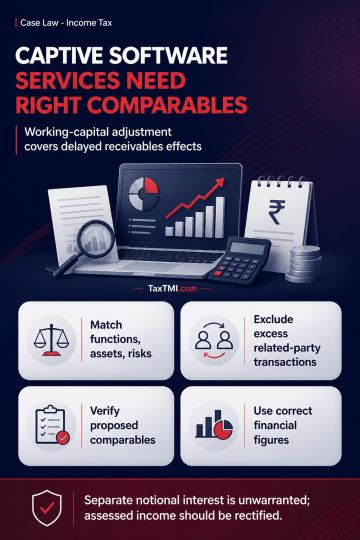
Working-capital adjustment subsumes delayed-receivable effects in TNMM benchmarking of captive software-development services, avoiding separate notion...
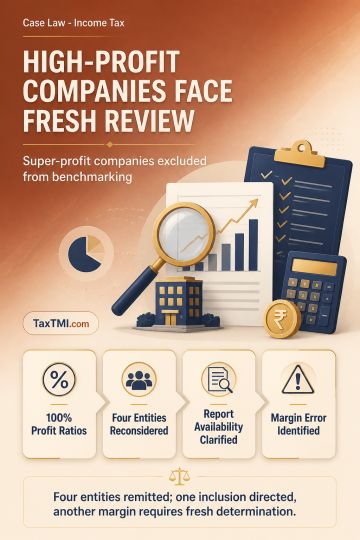
Transfer-pricing comparability requires exclusion of financially illogical super-profit comparables and correction of unsupported annual-report and ma...
Charitable character assessment preserves Section 80G approval despite inclusive spiritual teachings and incidental religious expenditure within the s...
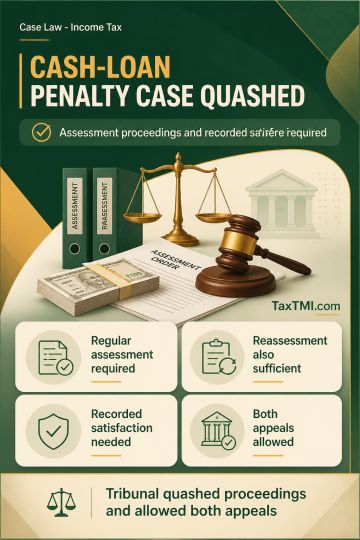
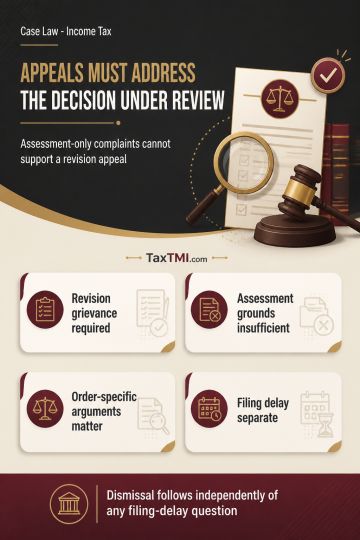
Penalty proceedings for cash-loan acceptance require assessment proceedings and recorded Assessing Officer satisfaction; absent these, the proceedings...
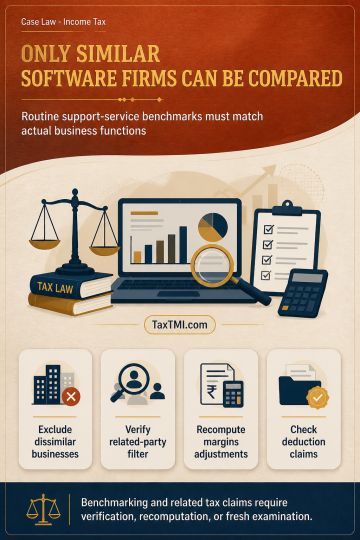
Functional comparability governs software-service benchmarking: dissimilar companies are excluded, while related-party filters, margins and working-ca...
Unpaid supply dues arising under a separate inter se agreement between joint venture partners constituted operational debt, because the contractual documents specifically allocated the supply obligation to the respondent and made payment contingent on receipt from OPTCL; the corporate debtor's acknowledgment of the balance payable confirmed liability, so admission of the Section 9 application was justified. The Section 10A objection failed because no factual foundation was laid below and the pleaded default date fell outside the protected period, making the statutory bar inapplicable. No pre-existing dispute was shown, as the correspondence relied on reflected acknowledgment of liability rather than a genuine dispute.
Unpaid supply dues arising under a separate inter se agreement between joint venture partners constituted operational debt, because the contractual documents specifically allocated the supply obligation to the respondent and made payment contingent on receipt from OPTCL; the corporate debtor's acknowledgment of the balance payable confirmed liability, so admission of the Section 9 application was justified. The Section 10A objection failed because no factual foundation was laid below and the pleaded default date fell outside the protected period, making the statutory bar inapplicable. No pre-existing dispute was shown, as the correspondence relied on reflected acknowledgment of liability rather than a genuine dispute.
Note: It is a system-generated summary and is for quick reference only.
 TaxTMI
  TaxTMI
 of 4824









 Join Channel