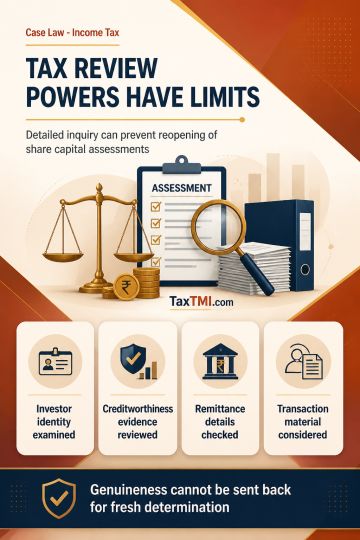
Revisionary jurisdiction cannot reopen share capital assessments where adequate inquiry supports a permissible view and no independent error is establ...
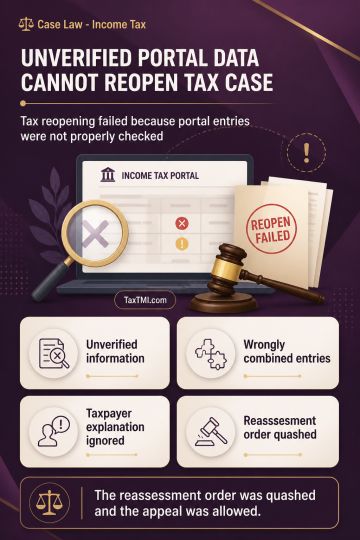
Reassessment jurisdiction fails where unverified portal information is aggregated without examining the taxpayer's explanation or relevance of entries...
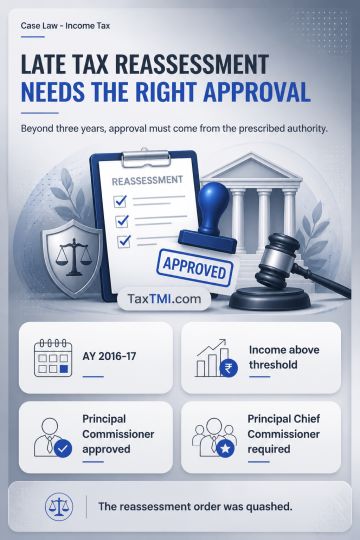
Statutory sanction for delayed reassessment requires approval from the prescribed authority; approval by an inferior authority invalidates jurisdictio...
Transfer pricing margin adjustments require matching treatment of non-operating income and related costs, with comparability issues reconsidered on ev...
Preliminary-expense amortisation and MAT exempt-income adjustments prevailed, while trademark costs and managerial remuneration require fresh verifica...
Export valuation requires contemporaneous evidence; unrelated invoices cannot prove overvaluation, and dual penalties on firm and partner are impermis...
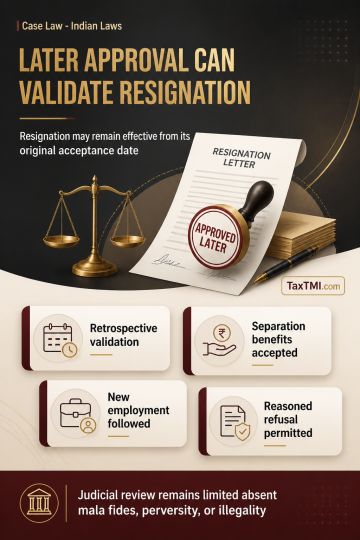
Ratification of resignation acceptance validates separation retrospectively, while withdrawal may be refused through reasoned administrative discretio...
Unpaid supply dues arising under a separate inter se agreement between joint venture partners constituted operational debt, because the contractual documents specifically allocated the supply obligation to the respondent and made payment contingent on receipt from OPTCL; the corporate debtor's acknowledgment of the balance payable confirmed liability, so admission of the Section 9 application was justified. The Section 10A objection failed because no factual foundation was laid below and the pleaded default date fell outside the protected period, making the statutory bar inapplicable. No pre-existing dispute was shown, as the correspondence relied on reflected acknowledgment of liability rather than a genuine dispute.
Unpaid supply dues arising under a separate inter se agreement between joint venture partners constituted operational debt, because the contractual documents specifically allocated the supply obligation to the respondent and made payment contingent on receipt from OPTCL; the corporate debtor's acknowledgment of the balance payable confirmed liability, so admission of the Section 9 application was justified. The Section 10A objection failed because no factual foundation was laid below and the pleaded default date fell outside the protected period, making the statutory bar inapplicable. No pre-existing dispute was shown, as the correspondence relied on reflected acknowledgment of liability rather than a genuine dispute.
Note: It is a system-generated summary and is for quick reference only.
 TaxTMI
  TaxTMI
 of 4817









 Join Channel


