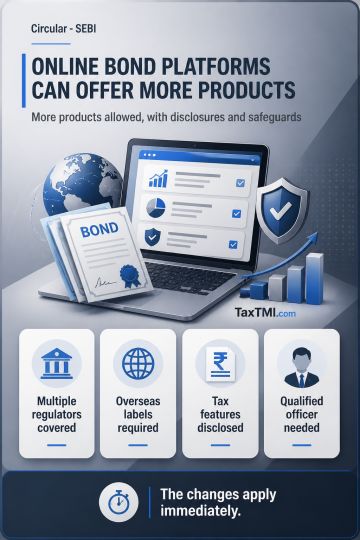
Online bond platforms may offer overseas-regulated products and tax-specific bonds subject to disclosures, compliance safeguards and revised complianc...
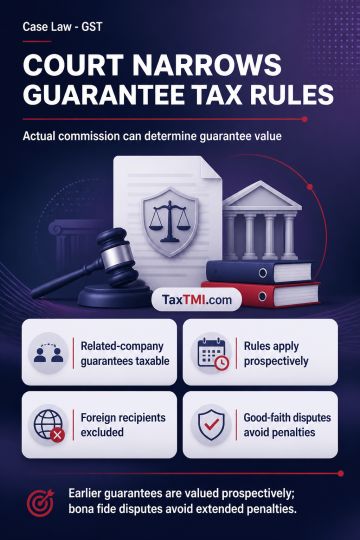
Corporate guarantee valuation permits actual ascertainable commission while barring retroactive application and extended-period penalties for bona fid...
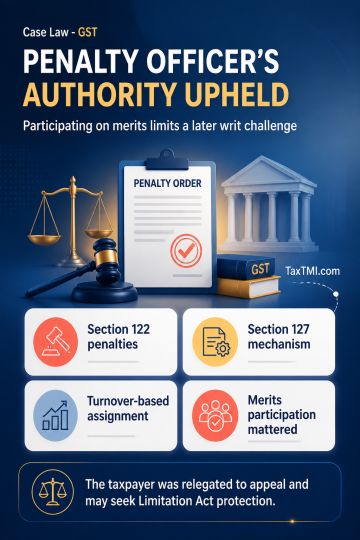
Proper-officer jurisdiction under UPGST penalty provisions upheld; participation on merits prevents bypassing the statutory appellate remedy through w...
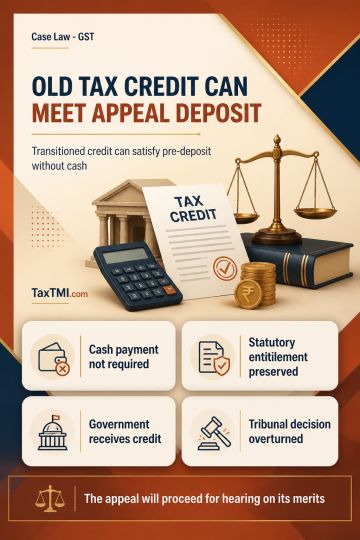
Transitioned CENVAT credit may validly satisfy mandatory pre-deposit requirements for legacy service tax appeals through Electronic Credit Ledger debi...
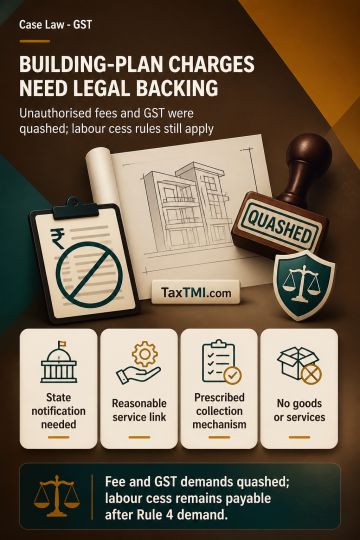
Building-plan sanction charges require statutory authority; unauthorised fees and GST were quashed, while labour cess must follow prescribed collectio...
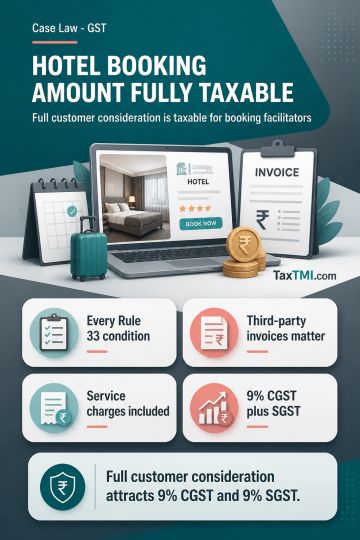
Pure-agent exclusion fails where hotel booking facilitators receive third-party services themselves, making entire customer consideration taxable as r...
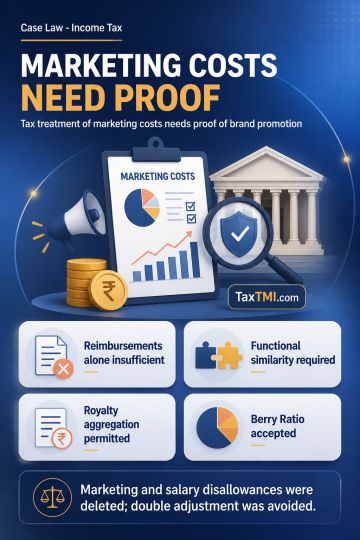
Transfer pricing requires evidence for AMP transactions, functionally reliable comparables, and appropriate aggregation or Berry Ratio benchmarking me...
Unpaid supply dues arising under a separate inter se agreement between joint venture partners constituted operational debt, because the contractual documents specifically allocated the supply obligation to the respondent and made payment contingent on receipt from OPTCL; the corporate debtor's acknowledgment of the balance payable confirmed liability, so admission of the Section 9 application was justified. The Section 10A objection failed because no factual foundation was laid below and the pleaded default date fell outside the protected period, making the statutory bar inapplicable. No pre-existing dispute was shown, as the correspondence relied on reflected acknowledgment of liability rather than a genuine dispute.
Unpaid supply dues arising under a separate inter se agreement between joint venture partners constituted operational debt, because the contractual documents specifically allocated the supply obligation to the respondent and made payment contingent on receipt from OPTCL; the corporate debtor's acknowledgment of the balance payable confirmed liability, so admission of the Section 9 application was justified. The Section 10A objection failed because no factual foundation was laid below and the pleaded default date fell outside the protected period, making the statutory bar inapplicable. No pre-existing dispute was shown, as the correspondence relied on reflected acknowledgment of liability rather than a genuine dispute.
Note: It is a system-generated summary and is for quick reference only.
 TaxTMI
  TaxTMI
 of 4817








 Join Channel


