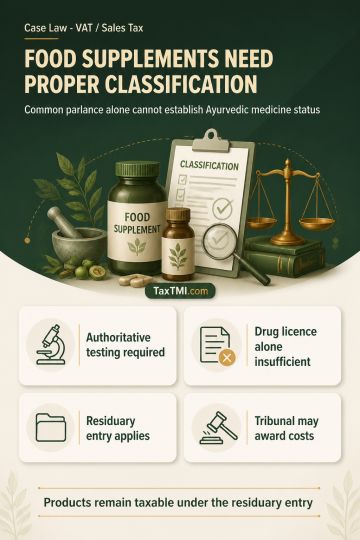
Food supplement classification requires common parlance and authoritative tests, preventing treatment as proprietary Ayurvedic medicines without suppo...
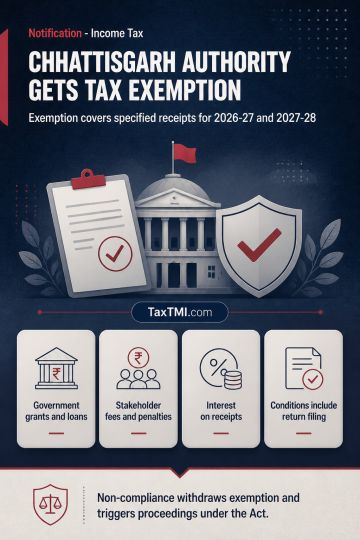
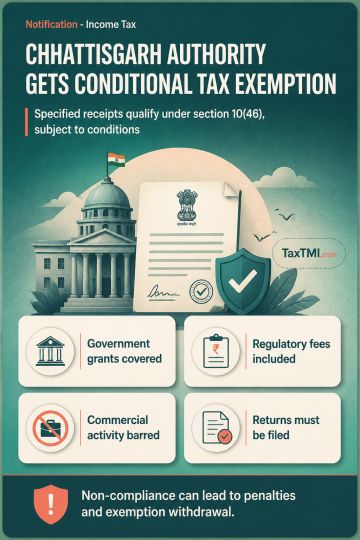
Specified regulatory authority income receives conditional tax exemption, subject to non-commercial activity, unchanged income character, and return f...
Tax exemption for regulatory authority income applies retrospectively, subject to non-commercial activity, unchanged income sources, and return-filing...
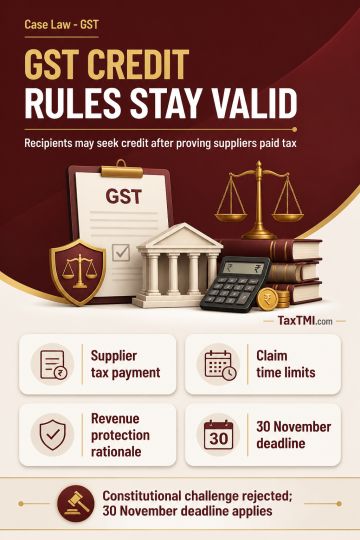
Input tax credit conditions remain constitutionally valid, with eligible recipient claims considered under GST circulars and retrospective filing dead...
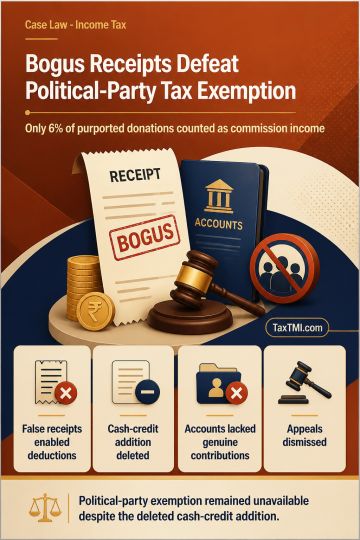
Bogus donation receipts justified commission income assessment and defeated political-party tax exemption for inaccurate accounts and reporting failur...
Page of 4811
Press 'Enter' after typing page number.
901 to 920 of 96208 Results
❮
❯
❯❯
0 / 200
Expand Note
Add to Folder
No Folders have been created
+
Are you sure you want to delete "My most important" ?
Section 138 of the NI Act is not confined to cheques issued for the drawer's own personal liability; a cheque drawn towards a legally enforceable liability of another person may also attract penal consequences on dishonour. The Court therefore rejected the objection based on absence of privity and the claim that the petitioner was not a party to the underlying consent award, holding that the complaint could proceed on a prima facie basis. Challenges that no amount was due, that the cheque was a gift, or that it formed part of a without-prejudice settlement raised disputed factual defences that could not be resolved at the process stage and had to be tested at trial.
Section 138 of the NI Act is not confined to cheques issued for the drawer's own personal liability; a cheque drawn towards a legally enforceable liability of another person may also attract penal consequences on dishonour. The Court therefore rejected the objection based on absence of privity and the claim that the petitioner was not a party to the underlying consent award, holding that the complaint could proceed on a prima facie basis. Challenges that no amount was due, that the cheque was a gift, or that it formed part of a without-prejudice settlement raised disputed factual defences that could not be resolved at the process stage and had to be tested at trial.
Note: It is a system-generated summary and is for quick reference only.
 TaxTMI
  TaxTMI
 of 4811






 Join Channel