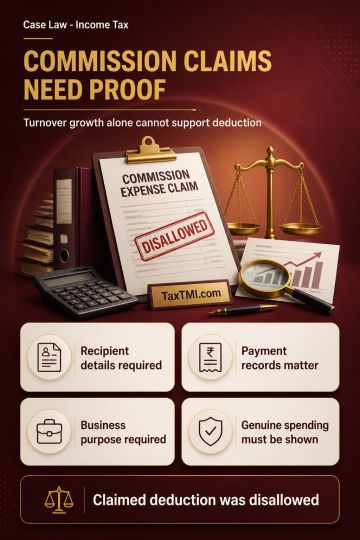
Business expenditure deduction requires proof of genuine commission payments and commercial allowability; turnover growth alone cannot validate the cl...
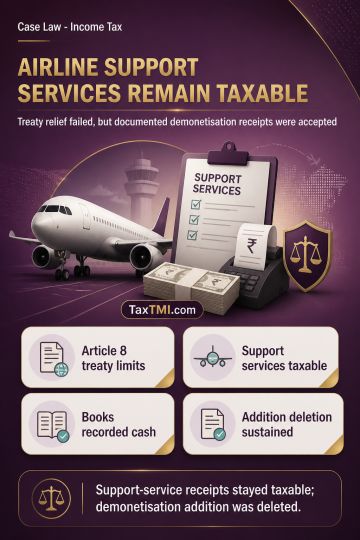
Article 8 treaty coverage excluded third-party airline support services, while documented demonetisation cash receipts remained accepted business inco...
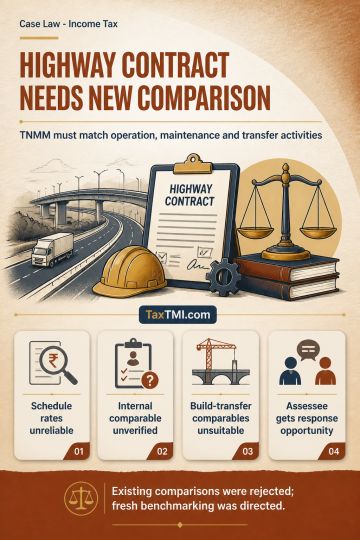
Functional comparability under TNMM requires highway contract benchmarks to reflect operation, maintenance and transfer activities, requiring fresh be...
Section 138 of the NI Act is not confined to cheques issued for the drawer's own personal liability; a cheque drawn towards a legally enforceable liability of another person may also attract penal consequences on dishonour. The Court therefore rejected the objection based on absence of privity and the claim that the petitioner was not a party to the underlying consent award, holding that the complaint could proceed on a prima facie basis. Challenges that no amount was due, that the cheque was a gift, or that it formed part of a without-prejudice settlement raised disputed factual defences that could not be resolved at the process stage and had to be tested at trial.
Section 138 of the NI Act is not confined to cheques issued for the drawer's own personal liability; a cheque drawn towards a legally enforceable liability of another person may also attract penal consequences on dishonour. The Court therefore rejected the objection based on absence of privity and the claim that the petitioner was not a party to the underlying consent award, holding that the complaint could proceed on a prima facie basis. Challenges that no amount was due, that the cheque was a gift, or that it formed part of a without-prejudice settlement raised disputed factual defences that could not be resolved at the process stage and had to be tested at trial.
Note: It is a system-generated summary and is for quick reference only.
 TaxTMI
  TaxTMI
 of 4811




 Join Channel


