Online bond platforms may offer overseas-regulated products and tax-specific bonds subject to disclosures, compliance safeguards and revised complianc...
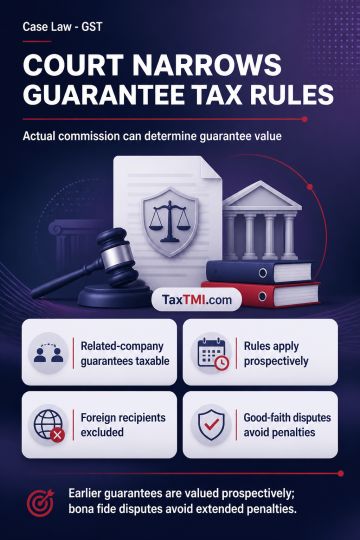
Corporate guarantee valuation permits actual ascertainable commission while barring retroactive application and extended-period penalties for bona fid...
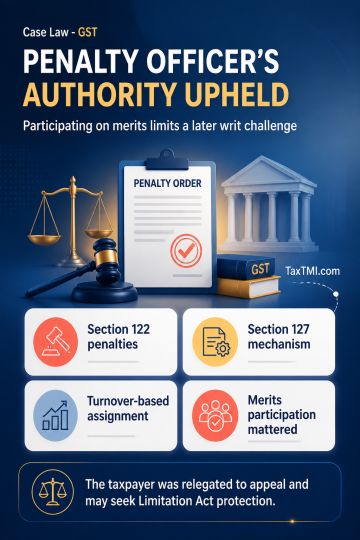
Proper-officer jurisdiction under UPGST penalty provisions upheld; participation on merits prevents bypassing the statutory appellate remedy through w...
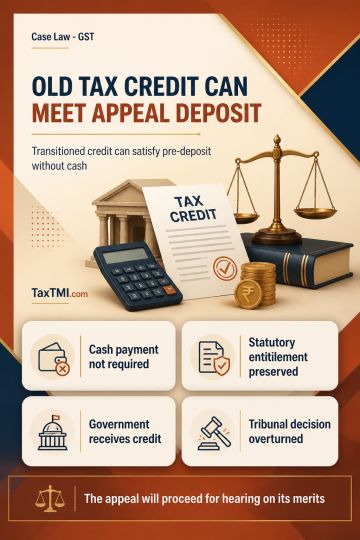
Transitioned CENVAT credit may validly satisfy mandatory pre-deposit requirements for legacy service tax appeals through Electronic Credit Ledger debi...
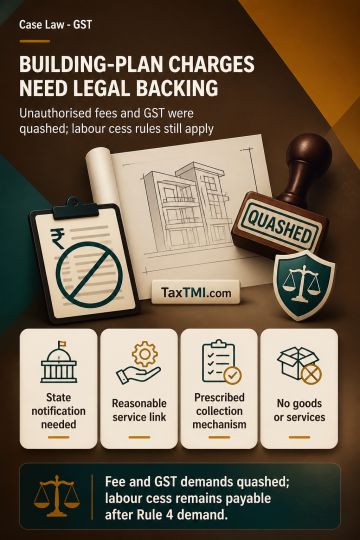
Building-plan sanction charges require statutory authority; unauthorised fees and GST were quashed, while labour cess must follow prescribed collectio...
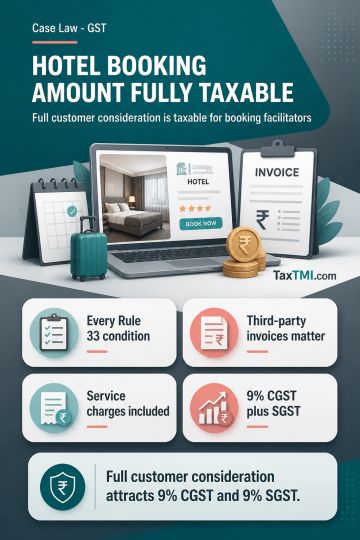
Pure-agent exclusion fails where hotel booking facilitators receive third-party services themselves, making entire customer consideration taxable as r...
Section 138 of the NI Act is not confined to cheques issued for the drawer's own personal liability; a cheque drawn towards a legally enforceable liability of another person may also attract penal consequences on dishonour. The Court therefore rejected the objection based on absence of privity and the claim that the petitioner was not a party to the underlying consent award, holding that the complaint could proceed on a prima facie basis. Challenges that no amount was due, that the cheque was a gift, or that it formed part of a without-prejudice settlement raised disputed factual defences that could not be resolved at the process stage and had to be tested at trial.
Section 138 of the NI Act is not confined to cheques issued for the drawer's own personal liability; a cheque drawn towards a legally enforceable liability of another person may also attract penal consequences on dishonour. The Court therefore rejected the objection based on absence of privity and the claim that the petitioner was not a party to the underlying consent award, holding that the complaint could proceed on a prima facie basis. Challenges that no amount was due, that the cheque was a gift, or that it formed part of a without-prejudice settlement raised disputed factual defences that could not be resolved at the process stage and had to be tested at trial.
Note: It is a system-generated summary and is for quick reference only.
 TaxTMI
  TaxTMI
 of 4816




 Join Channel


