Transfer pricing and tax deductions upheld on established principles, while employee contributions and warranty provisions returned for fresh examinat...
Captive transfer pricing relies on industrial consumer tariffs, while genuine quotations can benchmark effluent treatment transfers under the Other Me...
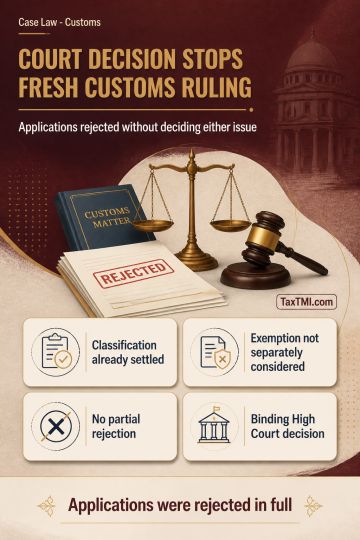
Specific tariff classification for ophthalmic instruments and extended limitation principles determine the treatment of duty demands, confiscation, an...
Integrated golf function determines classification, placing launch monitors and simulators under other golf equipment rather than measuring instrument...
Public servant status under anti-corruption law extends to recognised stock exchange leadership; constitutional and sanction challenges do not succeed...
Acquiescence, homebuyer protection and clean-slate resolution principles prevent landowners from disrupting an integrated project through late termina...
A security cheque was held unenforceable under the Negotiable Instruments Act because the complainant failed to prove a legally enforceable debt or liability on the date of presentation. The Court noted inconsistent versions about how the cheque came into the complainant's possession, non-examination of the intermediary witness, and no crystallised liability arising from contractual disputes at that stage. In an appeal against acquittal, the Court applied the settled rule that interference is justified only when the acquittal is palpably wrong or legally unsustainable. As the trial court's view was a possible and sound one, the strengthened presumption of innocence was not displaced and the acquittal was affirmed.
A security cheque was held unenforceable under the Negotiable Instruments Act because the complainant failed to prove a legally enforceable debt or liability on the date of presentation. The Court noted inconsistent versions about how the cheque came into the complainant's possession, non-examination of the intermediary witness, and no crystallised liability arising from contractual disputes at that stage. In an appeal against acquittal, the Court applied the settled rule that interference is justified only when the acquittal is palpably wrong or legally unsustainable. As the trial court's view was a possible and sound one, the strengthened presumption of innocence was not displaced and the acquittal was affirmed.
Note: It is a system-generated summary and is for quick reference only.
 TaxTMI
  TaxTMI
 of 4811

















 Join Channel


