Transaction value cannot be rejected solely on non-statutory valuation guidelines without corroborative evidence supporting reassessment of final cust...
Cross-examination rights and corroborated evidence limit customs penalties for misdeclaration in genuine import transactions involving documented clea...
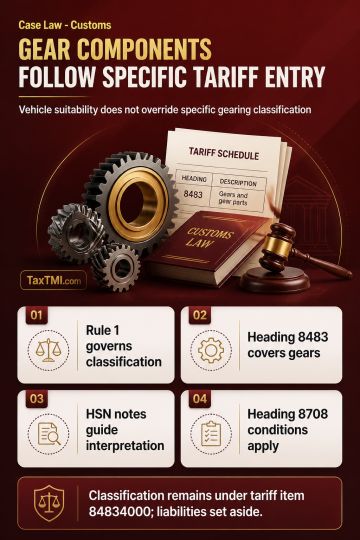
Tariff classification of vehicle gear components follows the specific gearing entry, displacing motor-vehicle parts classification and related liabili...
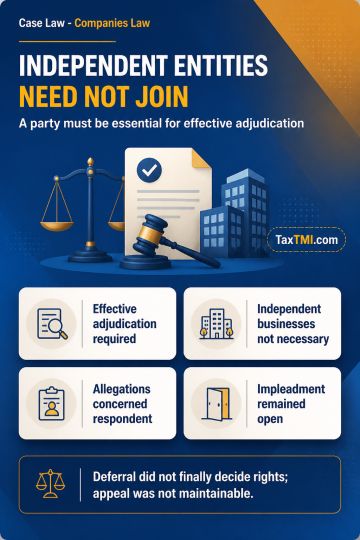
Necessary-party requirements limit impleadment of independent entities, while deferred consideration does not create an appealable adverse determinati...
Food supplement classification requires common parlance and authoritative tests, preventing treatment as proprietary Ayurvedic medicines without suppo...
Transfer pricing analysis under External TNMM remained the proper benchmarking method where the earlier remand had already excluded Internal TNMM and limited scrutiny to the comparables selected by the assessee. The text explains that mechanical turnover, export and product-difference filters could not justify wiping out the external comparable set for a limited-risk contract manufacturer earning a cost-plus return, and that comparable selection must reflect functions, assets and risks. It further states that AE and Non-AE segments were not internally comparable because the Non-AE business was entrepreneurial and risk-bearing, while audited segmental accounts could not be reworked absent specific defects. On that basis, the segmental results were restored and the transfer pricing adjustments were deleted.
Transfer pricing analysis under External TNMM remained the proper benchmarking method where the earlier remand had already excluded Internal TNMM and limited scrutiny to the comparables selected by the assessee. The text explains that mechanical turnover, export and product-difference filters could not justify wiping out the external comparable set for a limited-risk contract manufacturer earning a cost-plus return, and that comparable selection must reflect functions, assets and risks. It further states that AE and Non-AE segments were not internally comparable because the Non-AE business was entrepreneurial and risk-bearing, while audited segmental accounts could not be reworked absent specific defects. On that basis, the segmental results were restored and the transfer pricing adjustments were deleted.
Note: It is a system-generated summary and is for quick reference only.
 TaxTMI
  TaxTMI
 of 4814




















 Join Channel