Revisionary jurisdiction cannot reopen share capital assessments where adequate inquiry supports a permissible view and no independent error is establ...
Reassessment jurisdiction fails where unverified portal information is aggregated without examining the taxpayer's explanation or relevance of entries...
Statutory sanction for delayed reassessment requires approval from the prescribed authority; approval by an inferior authority invalidates jurisdictio...
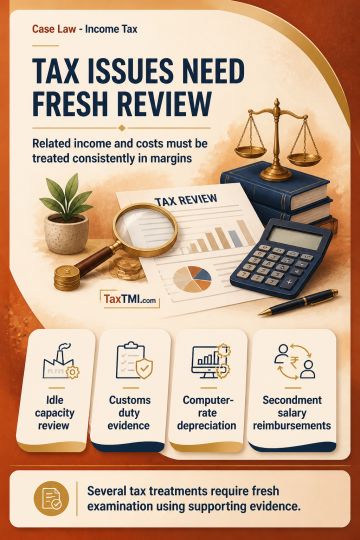
Transfer pricing margin adjustments require matching treatment of non-operating income and related costs, with comparability issues reconsidered on ev...
Preliminary-expense amortisation and MAT exempt-income adjustments prevailed, while trademark costs and managerial remuneration require fresh verifica...
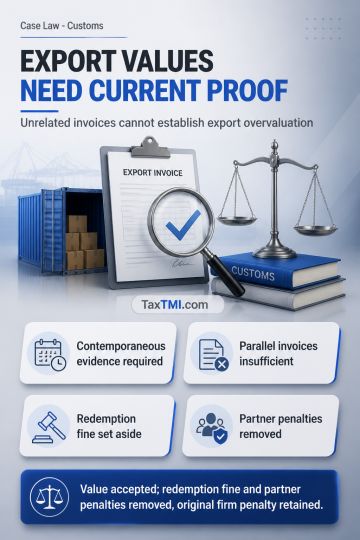
Export valuation requires contemporaneous evidence; unrelated invoices cannot prove overvaluation, and dual penalties on firm and partner are impermis...
Ratification of resignation acceptance validates separation retrospectively, while withdrawal may be refused through reasoned administrative discretio...
Transfer pricing analysis under External TNMM remained the proper benchmarking method where the earlier remand had already excluded Internal TNMM and limited scrutiny to the comparables selected by the assessee. The text explains that mechanical turnover, export and product-difference filters could not justify wiping out the external comparable set for a limited-risk contract manufacturer earning a cost-plus return, and that comparable selection must reflect functions, assets and risks. It further states that AE and Non-AE segments were not internally comparable because the Non-AE business was entrepreneurial and risk-bearing, while audited segmental accounts could not be reworked absent specific defects. On that basis, the segmental results were restored and the transfer pricing adjustments were deleted.
Transfer pricing analysis under External TNMM remained the proper benchmarking method where the earlier remand had already excluded Internal TNMM and limited scrutiny to the comparables selected by the assessee. The text explains that mechanical turnover, export and product-difference filters could not justify wiping out the external comparable set for a limited-risk contract manufacturer earning a cost-plus return, and that comparable selection must reflect functions, assets and risks. It further states that AE and Non-AE segments were not internally comparable because the Non-AE business was entrepreneurial and risk-bearing, while audited segmental accounts could not be reworked absent specific defects. On that basis, the segmental results were restored and the transfer pricing adjustments were deleted.
Note: It is a system-generated summary and is for quick reference only.
 TaxTMI
  TaxTMI
 of 4817



















 Join Channel


