Pre-amendment reassessment limitation bars late notices under the preserved regime, invalidating consequential reassessment for affected earlier asses...
Cash-sales explanations for bank deposits require documentary reconciliation; reassessment notice survived where effective response time was available...
Functional comparability in transfer pricing prevents ad hoc arm's length adjustments where functions, assets, risks and reliable comparables are unes...
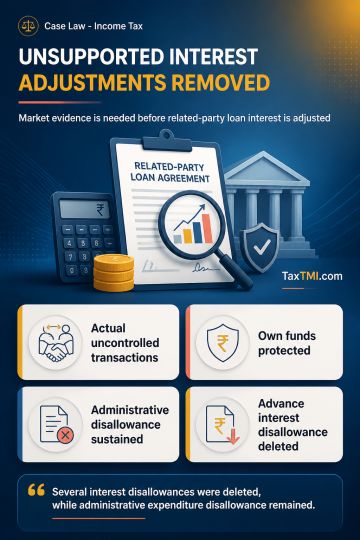
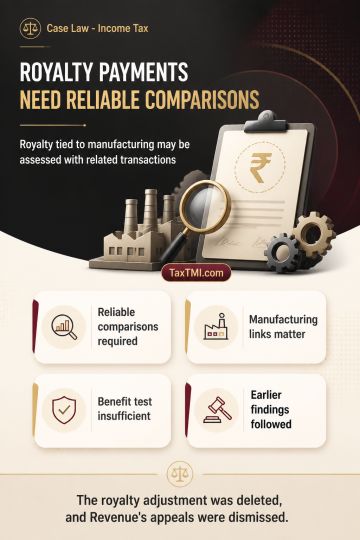
Contingency expenses, exempt-income disallowance, and royalty benchmarking: unsupported adjustments were deleted under consistent accounting and trans...
Transfer pricing analysis under External TNMM remained the proper benchmarking method where the earlier remand had already excluded Internal TNMM and limited scrutiny to the comparables selected by the assessee. The text explains that mechanical turnover, export and product-difference filters could not justify wiping out the external comparable set for a limited-risk contract manufacturer earning a cost-plus return, and that comparable selection must reflect functions, assets and risks. It further states that AE and Non-AE segments were not internally comparable because the Non-AE business was entrepreneurial and risk-bearing, while audited segmental accounts could not be reworked absent specific defects. On that basis, the segmental results were restored and the transfer pricing adjustments were deleted.
Transfer pricing analysis under External TNMM remained the proper benchmarking method where the earlier remand had already excluded Internal TNMM and limited scrutiny to the comparables selected by the assessee. The text explains that mechanical turnover, export and product-difference filters could not justify wiping out the external comparable set for a limited-risk contract manufacturer earning a cost-plus return, and that comparable selection must reflect functions, assets and risks. It further states that AE and Non-AE segments were not internally comparable because the Non-AE business was entrepreneurial and risk-bearing, while audited segmental accounts could not be reworked absent specific defects. On that basis, the segmental results were restored and the transfer pricing adjustments were deleted.
Note: It is a system-generated summary and is for quick reference only.
 TaxTMI
  TaxTMI
 of 4918