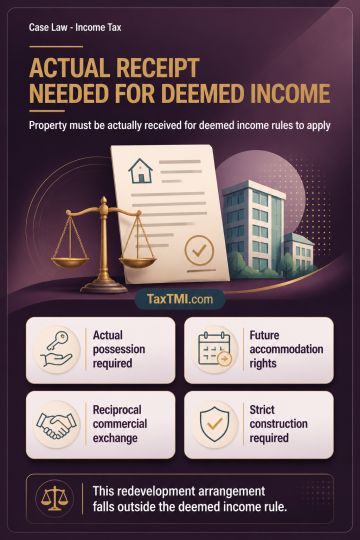
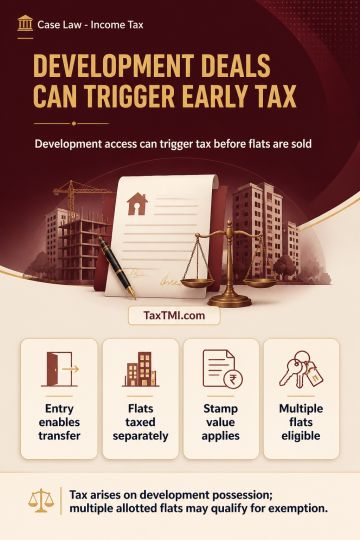
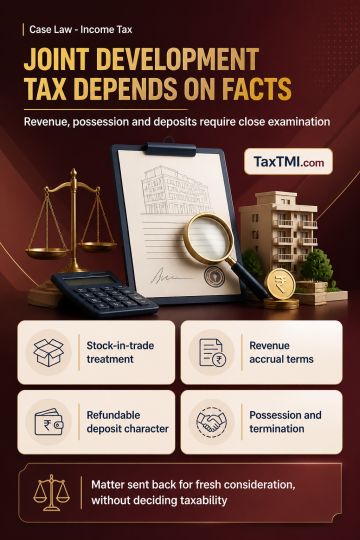
Receipt of immovable property requires actual possession or enjoyment; redevelopment allotments exchanged for tenancy rights fall outside deemed incom...
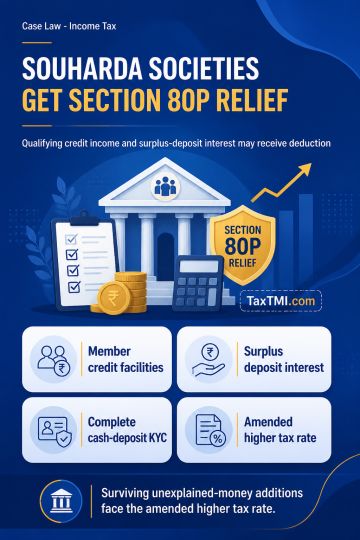
Section 80P deduction covers Souharda credit societies, including qualifying surplus-deposit interest, subject to member KYC verification for cash dep...
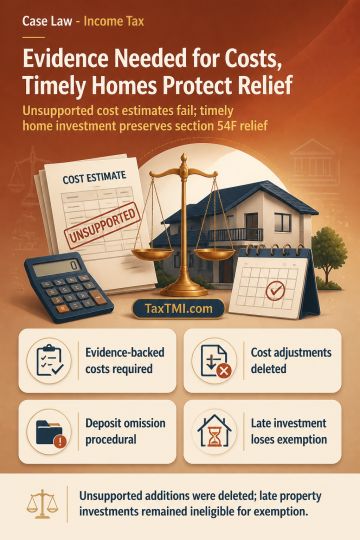
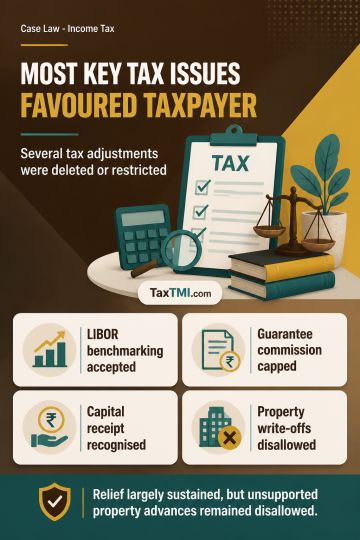
Transfer-pricing benchmarking and capital-receipt principles sustained taxpayer relief, while unsupported property-advance write-offs remained disallo...
The Tribunal held that the respondent contravened the anti-profiteering mandate by failing to pass on the incremental input tax credit benefit to homebuyers in a uniform and commensurate manner. It accepted the DGAP's computation that the post-GST ITC ratio increased, and ruled that any excess adjustment in some cases could not cure the shortfall in others, leaving the balance benefit refundable to eligible buyers. It further held that the profiteered amount, computed on values exclusive of GST but collected from buyers inclusive of GST, had to include the GST component. Interest at 18% per annum was directed on the amount not passed on, and penalty exposure under Section 171(3A) was recorded for the relevant period.
The Tribunal held that the respondent contravened the anti-profiteering mandate by failing to pass on the incremental input tax credit benefit to homebuyers in a uniform and commensurate manner. It accepted the DGAP's computation that the post-GST ITC ratio increased, and ruled that any excess adjustment in some cases could not cure the shortfall in others, leaving the balance benefit refundable to eligible buyers. It further held that the profiteered amount, computed on values exclusive of GST but collected from buyers inclusive of GST, had to include the GST component. Interest at 18% per annum was directed on the amount not passed on, and penalty exposure under Section 171(3A) was recorded for the relevant period.
Note: It is a system-generated summary and is for quick reference only.
 TaxTMI
 of 4796





 Join Channel


 TaxTMI
