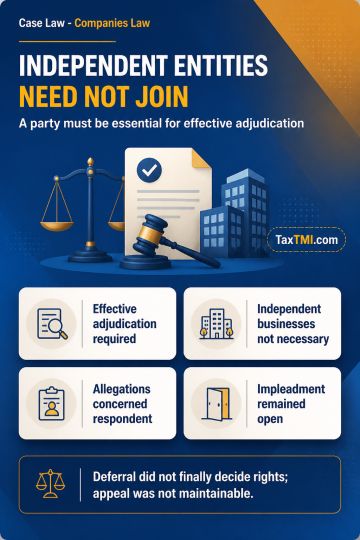
Necessary-party requirements limit impleadment of independent entities, while deferred consideration does not create an appealable adverse determinati...
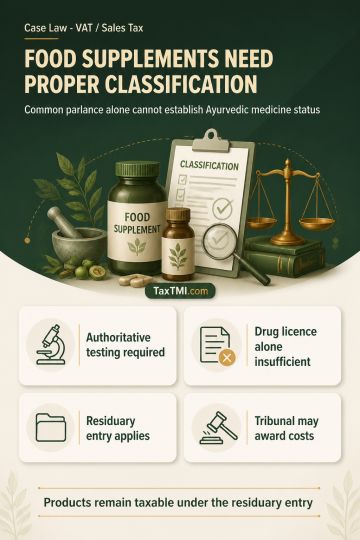
Food supplement classification requires common parlance and authoritative tests, preventing treatment as proprietary Ayurvedic medicines without suppo...
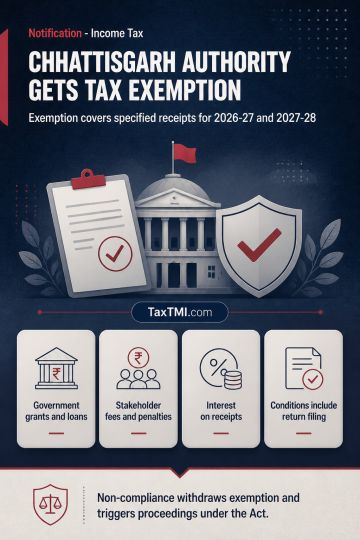
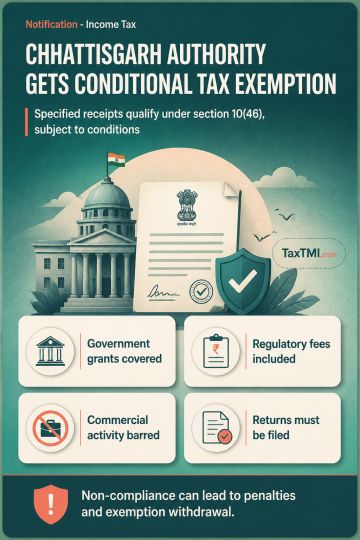
Specified regulatory authority income receives conditional tax exemption, subject to non-commercial activity, unchanged income character, and return f...
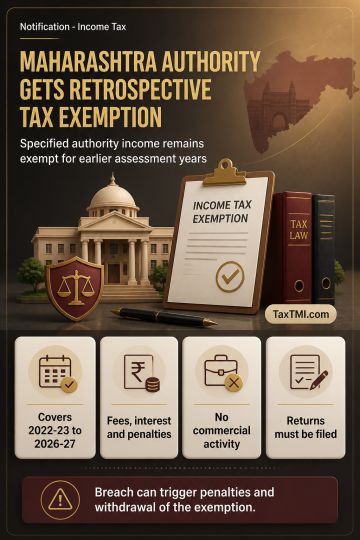
Tax exemption for regulatory authority income applies retrospectively, subject to non-commercial activity, unchanged income sources, and return-filing...
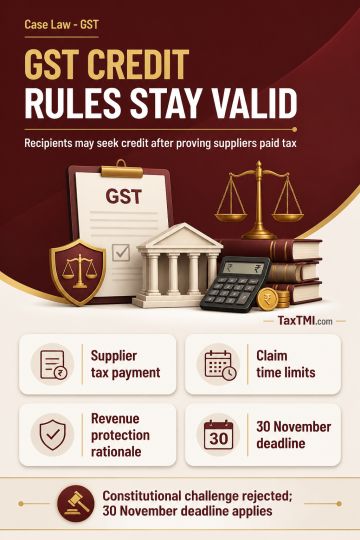
Input tax credit conditions remain constitutionally valid, with eligible recipient claims considered under GST circulars and retrospective filing dead...
Payment of damages under an arbitral award did not amount to a taxable supply under the CGST Act because the settlement before the Delhi High Court was not an independent commercial arrangement to refrain from an act or tolerate a situation. The withdrawal or suspension of enforcement proceedings in the UK and US followed only from full satisfaction of the award and did not create separate consideration or a distinct service. In the absence of an independent contract and consideration, Section 7 and Entry 5(e) of Schedule II were inapplicable, and the IGST charge could not be sustained. The intimation and show cause notice were quashed for lack of jurisdiction, and the writ petition was entertained despite the alternate remedy rule.
Payment of damages under an arbitral award did not amount to a taxable supply under the CGST Act because the settlement before the Delhi High Court was not an independent commercial arrangement to refrain from an act or tolerate a situation. The withdrawal or suspension of enforcement proceedings in the UK and US followed only from full satisfaction of the award and did not create separate consideration or a distinct service. In the absence of an independent contract and consideration, Section 7 and Entry 5(e) of Schedule II were inapplicable, and the IGST charge could not be sustained. The intimation and show cause notice were quashed for lack of jurisdiction, and the writ petition was entertained despite the alternate remedy rule.
Note: It is a system-generated summary and is for quick reference only.
 TaxTMI
  TaxTMI
 of 4817



 Join Channel