Transfer pricing and tax deductions upheld on established principles, while employee contributions and warranty provisions returned for fresh examinat...
Captive transfer pricing relies on industrial consumer tariffs, while genuine quotations can benchmark effluent treatment transfers under the Other Me...
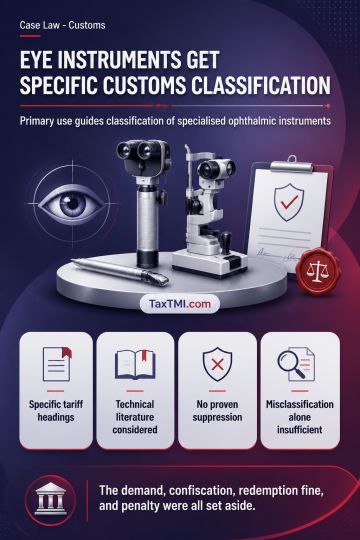
Specific tariff classification for ophthalmic instruments and extended limitation principles determine the treatment of duty demands, confiscation, an...
Integrated golf function determines classification, placing launch monitors and simulators under other golf equipment rather than measuring instrument...
Public servant status under anti-corruption law extends to recognised stock exchange leadership; constitutional and sanction challenges do not succeed...
Acquiescence, homebuyer protection and clean-slate resolution principles prevent landowners from disrupting an integrated project through late termina...
The ITAT upheld rejection of the assessee's books of account under section 145(3) because verifiable labour records, third-party confirmations, project-wise details and reconciliations were not produced, and major expenses rested on self-made vouchers with no credible support. Once the accounts were rejected, profit had to be estimated on a fair and reasonable basis, but the Tribunal found the Assessing Officer's 8% rate excessive because it relied on non-comparable listed companies and a section 44AD benchmark that could not be mechanically applied beyond the prescribed turnover limit. Considering the nature of the sub-contract business, remote working conditions and defects in the records, profit was estimated at 5% of turnover.
The ITAT upheld rejection of the assessee's books of account under section 145(3) because verifiable labour records, third-party confirmations, project-wise details and reconciliations were not produced, and major expenses rested on self-made vouchers with no credible support. Once the accounts were rejected, profit had to be estimated on a fair and reasonable basis, but the Tribunal found the Assessing Officer's 8% rate excessive because it relied on non-comparable listed companies and a section 44AD benchmark that could not be mechanically applied beyond the prescribed turnover limit. Considering the nature of the sub-contract business, remote working conditions and defects in the records, profit was estimated at 5% of turnover.
Note: It is a system-generated summary and is for quick reference only.
 TaxTMI
  TaxTMI
 of 4811














 Join Channel


