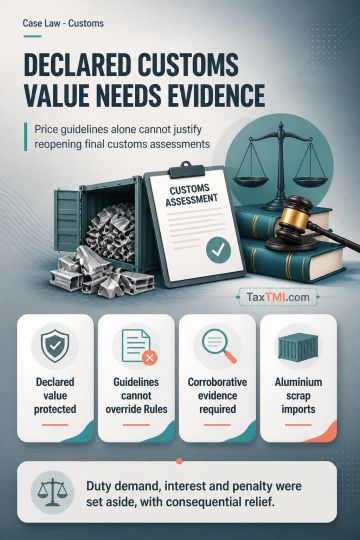
Transaction value cannot be rejected solely on non-statutory valuation guidelines without corroborative evidence supporting reassessment of final cust...
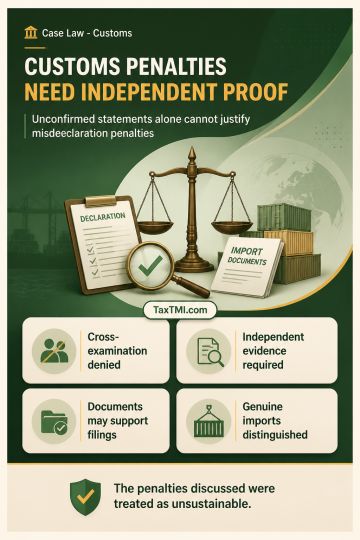
Cross-examination rights and corroborated evidence limit customs penalties for misdeclaration in genuine import transactions involving documented clea...
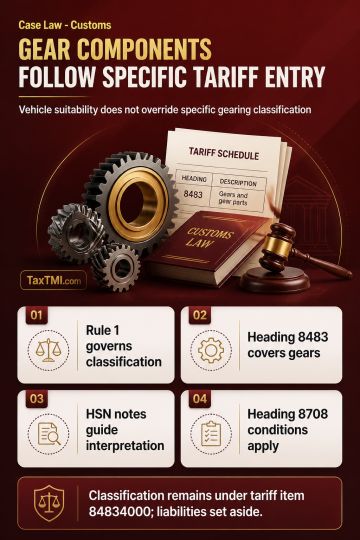
Tariff classification of vehicle gear components follows the specific gearing entry, displacing motor-vehicle parts classification and related liabili...
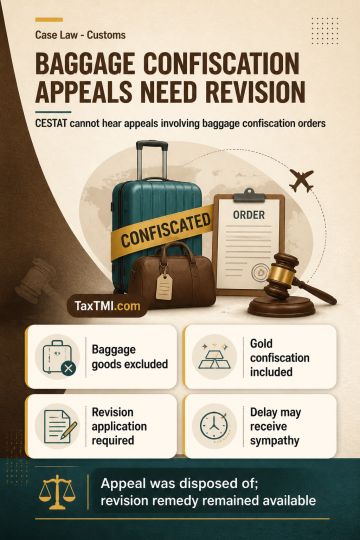
Necessary-party requirements limit impleadment of independent entities, while deferred consideration does not create an appealable adverse determinati...
Food supplement classification requires common parlance and authoritative tests, preventing treatment as proprietary Ayurvedic medicines without suppo...
The ITAT upheld rejection of the assessee's books of account under section 145(3) because verifiable labour records, third-party confirmations, project-wise details and reconciliations were not produced, and major expenses rested on self-made vouchers with no credible support. Once the accounts were rejected, profit had to be estimated on a fair and reasonable basis, but the Tribunal found the Assessing Officer's 8% rate excessive because it relied on non-comparable listed companies and a section 44AD benchmark that could not be mechanically applied beyond the prescribed turnover limit. Considering the nature of the sub-contract business, remote working conditions and defects in the records, profit was estimated at 5% of turnover.
The ITAT upheld rejection of the assessee's books of account under section 145(3) because verifiable labour records, third-party confirmations, project-wise details and reconciliations were not produced, and major expenses rested on self-made vouchers with no credible support. Once the accounts were rejected, profit had to be estimated on a fair and reasonable basis, but the Tribunal found the Assessing Officer's 8% rate excessive because it relied on non-comparable listed companies and a section 44AD benchmark that could not be mechanically applied beyond the prescribed turnover limit. Considering the nature of the sub-contract business, remote working conditions and defects in the records, profit was estimated at 5% of turnover.
Note: It is a system-generated summary and is for quick reference only.
 TaxTMI
  TaxTMI
 of 4814













 Join Channel




